



















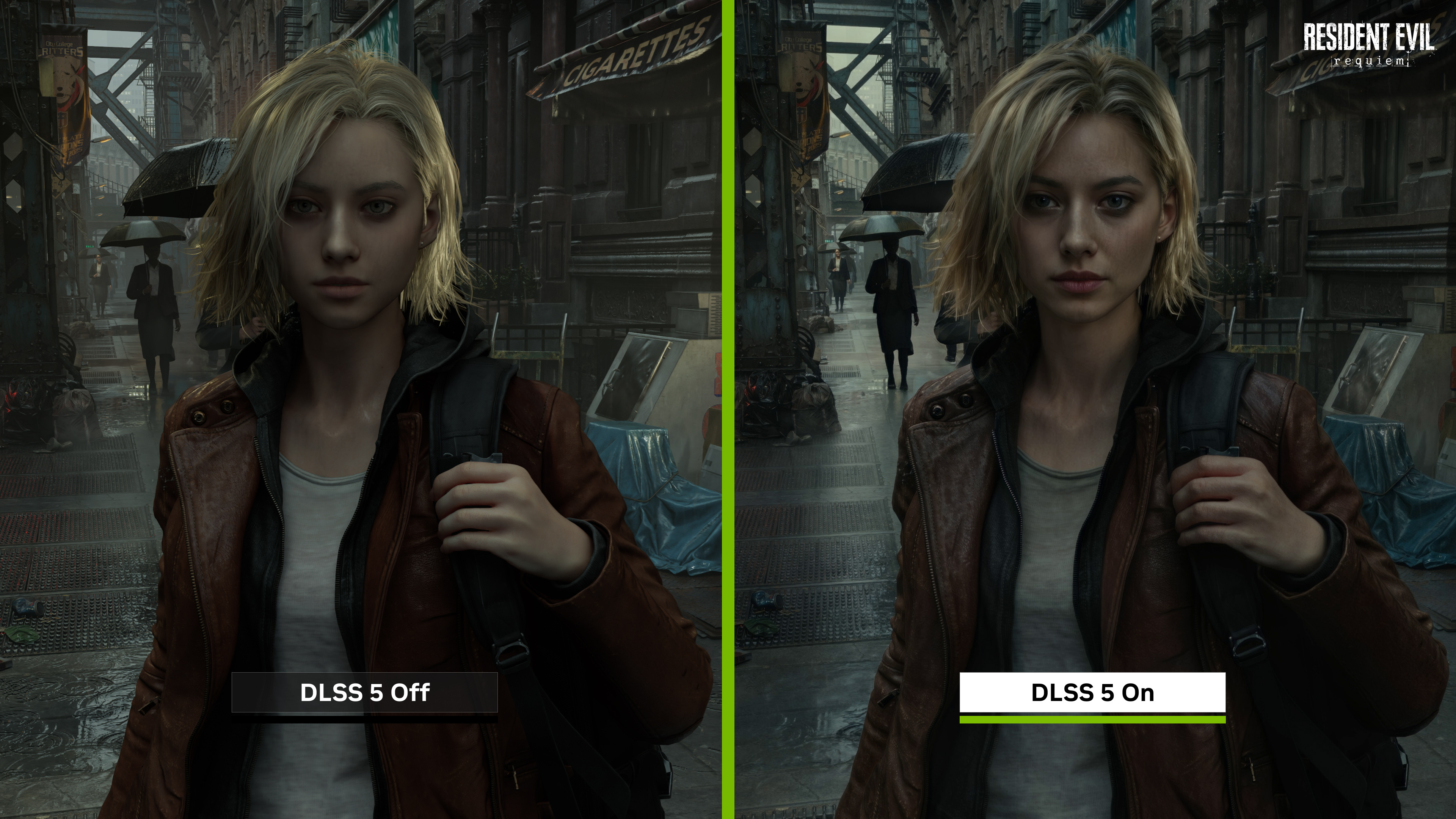
At the latest Nvidia GTC 2026 keynote, Jensen Huang unveiled DLSS 5, the newest version of Nvidia’s AI-powered graphics technology designed to make video games more realistic while reducing the computational load on GPUs.
Developed by Nvidia, DLSS (Deep Learning Super Sampling) has long been one of the company’s key innovations for improving gaming performance. The latest version introduces a major shift by combining traditional 3D rendering data with generative AI models.
The result is a system capable of producing detailed, photorealistic images without needing to render every pixel using conventional graphics pipelines.
How DLSS 5 Combines Graphics Rendering and Generative AI
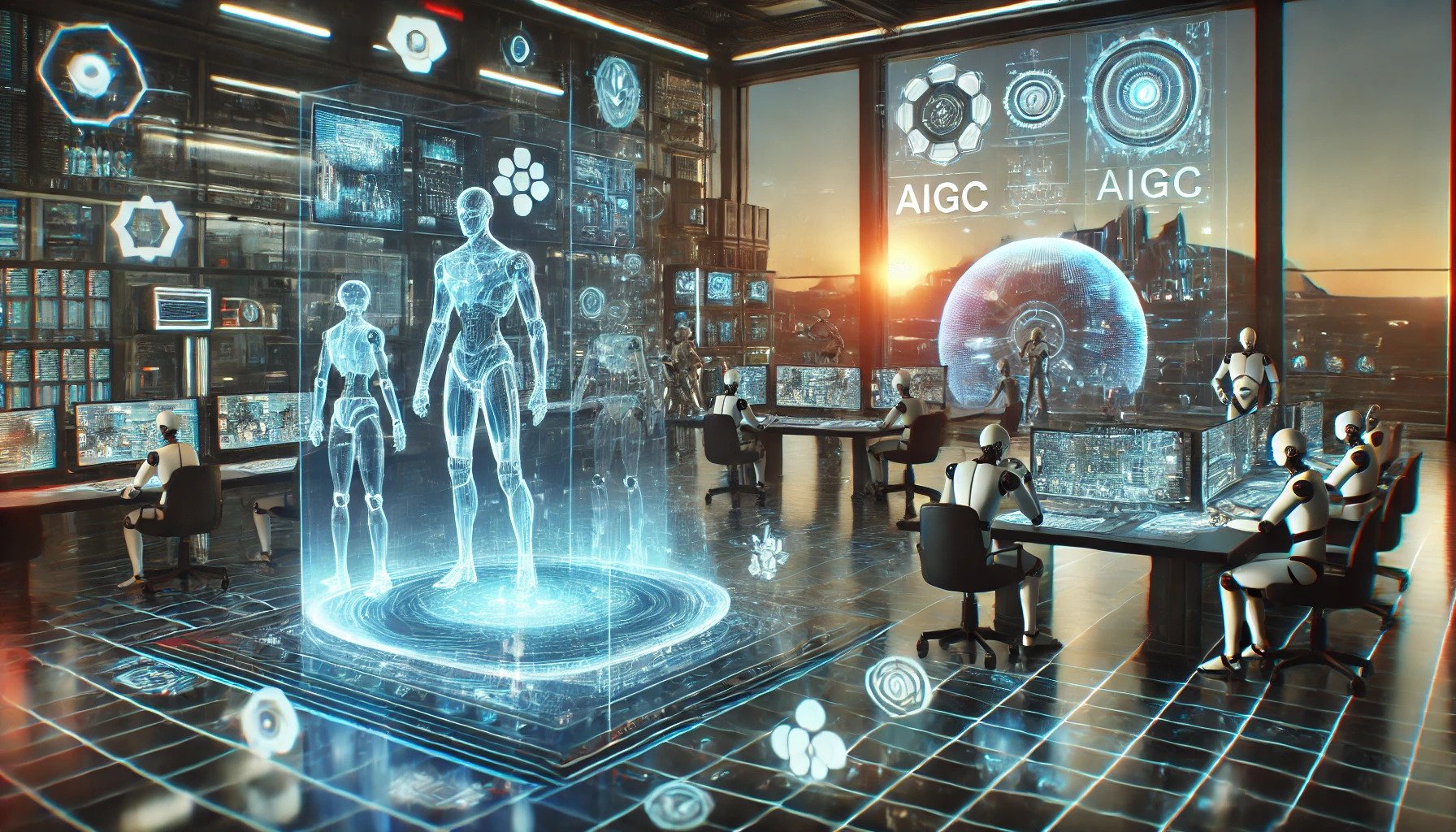
DLSS 5 works by blending two distinct computing approaches.
Traditional video game graphics rely on structured 3D data that defines the geometry and lighting of virtual environments. Meanwhile, generative AI models analyze patterns and predict how images should appear.
By merging these two methods, DLSS 5 can generate high-quality visuals using less raw rendering power.
During the keynote, Huang described the approach as combining:
- Structured graphics data, which provides accurate control over virtual environments
- Generative AI, which predicts and fills missing visual details
This allows GPUs to render complex scenes much more efficiently.
Better Visual Quality With Less Compute Power

One of the biggest advantages of DLSS technology is performance efficiency.
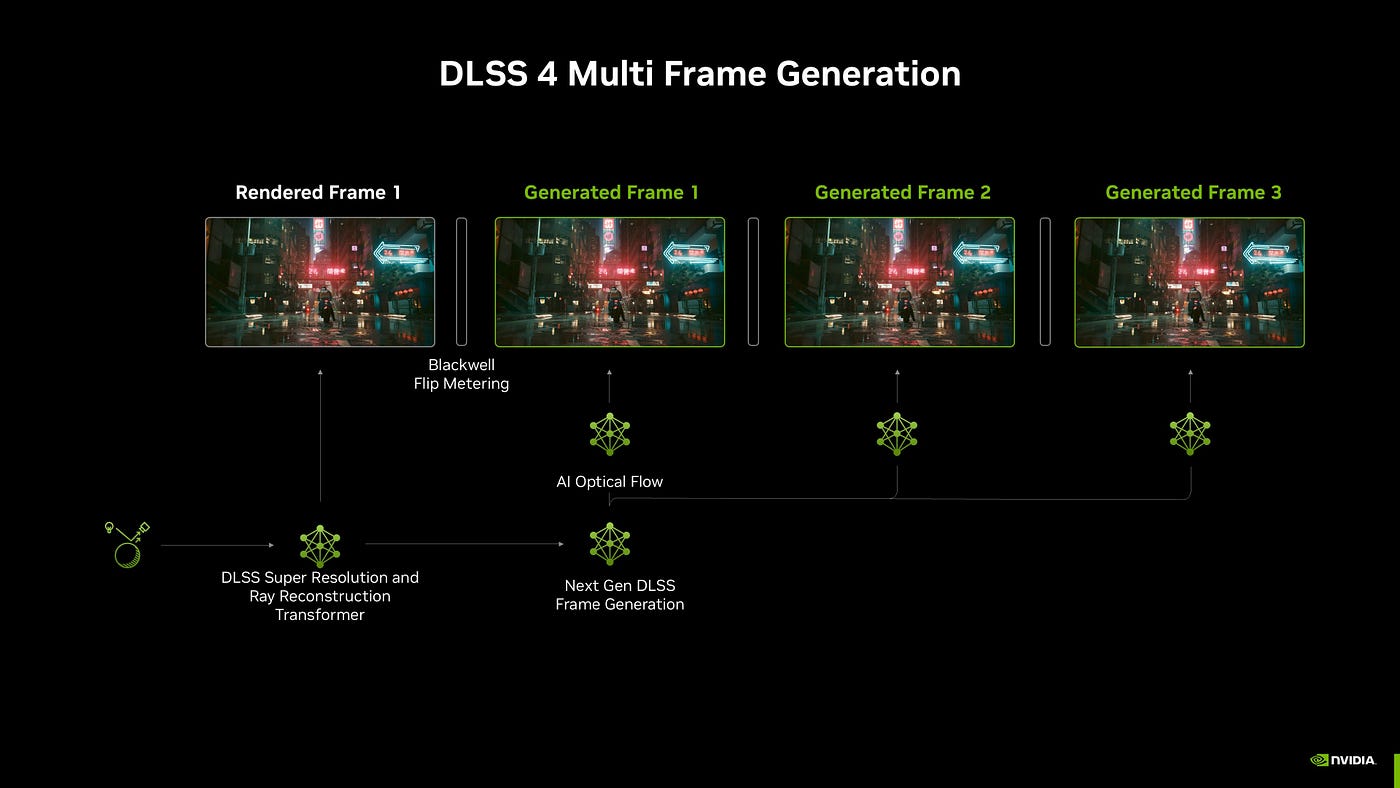
Rendering every detail of a modern game scene requires massive computational power. DLSS allows the GPU to render fewer pixels while AI reconstructs the final image at higher resolution.
With DLSS 5, generative AI models are now able to predict entire portions of frames, creating highly detailed scenes and realistic characters with significantly lower hardware demands.
This could enable developers to deliver:
- higher frame rates
- improved visual fidelity
- larger and more detailed virtual worlds
Nvidia Says the Technology Goes Beyond Gaming

4
Although DLSS was originally designed for gaming, Nvidia believes the underlying technology could influence many other industries.
Huang suggested that the same approach — combining structured data with generative AI — could be applied across enterprise computing.
He pointed to large-scale data platforms such as:
- Snowflake
- Databricks
- Google BigQuery
These platforms store vast structured datasets that AI systems could analyze to generate insights or automate complex tasks.
According to Huang, future AI systems will increasingly combine structured data with generative AI models to create more powerful and reliable applications.
The Future of AI-Powered Graphics
While gaming represents a smaller portion of Nvidia’s revenue today compared with its booming AI data center business, it remains a critical proving ground for new technologies.
Innovations developed for gaming often become foundational technologies used across other industries.
With DLSS 5, Nvidia is demonstrating how generative AI can transform real-time graphics, potentially influencing everything from gaming and film production to simulation, robotics, and digital twins.
As AI and graphics computing continue to converge, the line between rendered and generated visuals may become increasingly difficult to distinguish.