


























It’s often said that we are the average of the five people we spend the most time with. For years, that idea shaped how we thought about influence, growth, and success. But in 2026, that definition no longer holds up the way it used to. Today, we are increasingly shaped by something else entirely—the AI systems we choose to rely on.
We’ve already moved past the phase where artificial intelligence was treated like a novelty. There was a time when asking a chatbot to write a poem or generate something amusing felt impressive enough. That moment didn’t last. What we’re seeing now is the transition into a much more practical phase, where AI is no longer something you experiment with, but something you depend on. These systems are becoming quiet partners in both our personal and professional lives, helping us make decisions, process information, and manage complexity at a scale that wasn’t possible before.
And yet, many people are still approaching this shift the wrong way. They are searching for a single “best” AI, expecting one tool to handle everything. But that approach is fundamentally flawed. Just as you wouldn’t use a high-performance sports car to carry heavy materials, you shouldn’t rely on a general-purpose AI to handle specialized, high-stakes tasks. The real advantage comes from building a curated system—a digital inner circle of AI tools, each designed to handle a specific role.
Personal Sovereignty: The AI Domestic Cabinet
In everyday life, time is the most valuable resource we have, followed closely by peace of mind. And increasingly, both are being influenced by how effectively we use AI.
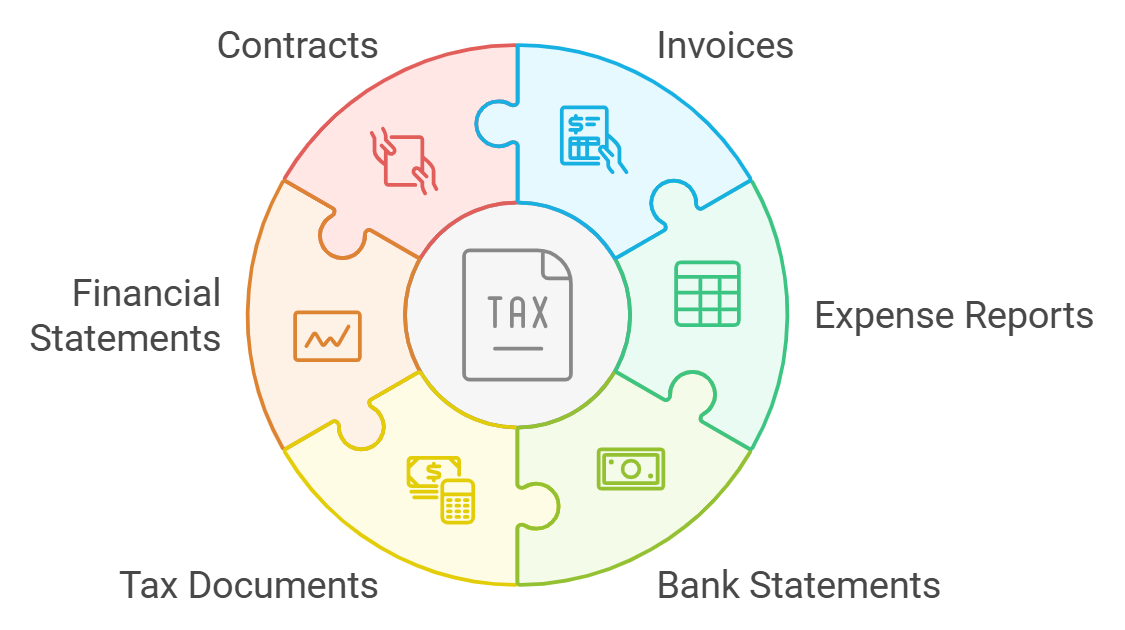
We are seeing a clear shift toward specialized systems that do more than simply respond to questions. These tools are designed to take action. They analyze, interpret, and guide. In areas like legal and financial decision-making, this change is especially significant. Most people don’t have the time—or the expertise—to fully understand every contract or document they encounter. That’s where AI begins to act as a protective layer.
Instead of skimming through complex language and hoping for the best, you can rely on systems that highlight unusual clauses, identify potential risks, and explain key details in plain terms. The same principle applies to financial planning and even healthcare-related information. AI becomes a first line of clarity, helping you understand before you commit.
It doesn’t replace professionals. But it changes how often—and how urgently—you need them.
Your AI Chief of Staff
While specialized tools handle complexity, general AI systems are evolving into something closer to a personal coordinator—a kind of digital chief of staff.
These systems don’t just wait for instructions. They connect to your data, understand your habits, and begin to anticipate your needs. Emails, calendars, travel plans, and preferences are no longer isolated pieces of information. They become part of a unified system that works alongside you.
Planning a trip, organizing your week, or managing day-to-day logistics becomes less about manual effort and more about guided execution. You’re still making the decisions, but the process is no longer overwhelming. It’s streamlined.
Small Business, Powered by AI
4
For small business owners, this transformation is even more impactful. AI is no longer just a supporting tool—it’s becoming an operational backbone.
Tasks that once required entire departments can now be handled by intelligent systems working continuously in the background. Financial processes become automated, anomalies are detected in real time, and reporting becomes a seamless part of daily operations.
Marketing shifts from manual execution to strategic oversight. AI tools help maintain brand consistency, generate content, and adapt messaging based on audience behavior. Customer interactions become more responsive and more personalized, even without a large support team.
This is not about replacing people. It’s about removing limitations. It allows smaller teams to operate with the efficiency and capability of much larger organizations.
Let AI Filter the Noise


As powerful as AI has become, it also introduces a new challenge: information overload. The pace of innovation is relentless, and trying to keep up with every update can quickly become exhausting.
The smarter approach is not to follow everything—but to filter it. And the most effective way to do that is by using AI itself. Let it track trends, summarize developments, and surface only what is relevant to your goals.
This shift is subtle, but it’s critical. It moves you from reacting to information to acting on insight.
The Next Step: AI in the Physical World

The evolution of AI is no longer limited to software. It is beginning to take physical form.
Home robots are emerging as a new layer of interaction between humans and machines. These systems can move through your environment, monitor conditions, manage devices, and respond dynamically to your behavior. What used to be a “smart home” is gradually becoming something more adaptive and responsive—something that feels less like a collection of devices and more like an integrated system.
Final Thought
The transition we are living through is as significant as any major technological shift in history. You don’t need to understand every detail behind it. But you do need to understand how to navigate it.
Because in the end, success in this new era won’t come from simply using AI.
It will come from choosing the right AI—and building the right system around it.