























As warehouses become increasingly automated, a quiet but critical problem is starting to surface. It’s not about robots, AI, or even software—it’s about connectivity.
The rapid rise of autonomous mobile robots is transforming logistics, retail, and manufacturing at a scale few predicted. Entire fleets of machines now move inventory, navigate complex layouts, and operate with minimal human intervention. This shift is fueling explosive growth in the robots-as-a-service (RaaS) market, which is expected to expand at more than 30% annually through the end of the decade.
But as these fleets grow, one thing becomes painfully clear: traditional Wi-Fi is no longer enough.
When Connectivity Becomes the Weakest Link
In a modern warehouse, robots are not just machines—they are constantly connected systems. They rely on real-time communication to receive instructions, report status, and coordinate movement with other robots.
If that connection drops, even briefly, the consequences can be immediate.
Autonomous robots operate using a continuous “heartbeat” signal that confirms they are connected and functioning. The moment that signal is lost, the system often forces the robot to shut down as a safety precaution. In a small deployment, this might be manageable. But in a warehouse with hundreds of robots, it becomes a serious operational issue.
One robot stopping unexpectedly is not just an inconvenience—it can disrupt workflows, create bottlenecks, and in some cases, introduce safety risks for both machines and human workers.
Why Wi-Fi Breaks at Scale
Wi-Fi works well in controlled, low-density environments. But warehouses are anything but predictable.
Robots move constantly, often at high speeds, transitioning between coverage zones. Add dozens—or hundreds—of devices competing for bandwidth, and the network quickly becomes unstable. Signal interference from metal shelving, machinery, and dense layouts only makes things worse.
Unlike older automated guided vehicles that followed fixed paths, modern robots are dynamic. They navigate using sensors, cameras, and AI, adjusting routes in real time to avoid obstacles. That flexibility comes at a cost: they require continuous, low-latency communication to function safely.
And this is where Wi-Fi begins to fail.
Enter Private 5G: A Different Approach


To solve this problem, companies like Celona and Digi International are pushing a different solution—private 5G networks designed specifically for industrial environments.
Unlike traditional Wi-Fi, private 5G offers more stable connections, lower latency, and better performance in high-density, high-mobility scenarios. Instead of relying on dozens or even hundreds of Wi-Fi access points, a warehouse can operate with a smaller number of strategically placed 5G nodes.
The difference is not just technical—it’s operational. With more reliable connectivity, robots remain online, synchronized, and responsive, even as fleet sizes grow.
Edge devices and industrial routers play a key role in this ecosystem, bridging older equipment—such as sensors and controllers—with modern 5G networks. This allows companies to upgrade connectivity without replacing entire systems.
When Robots Collide

Connectivity is not just about efficiency—it’s about safety.
In large-scale operations, robots move quickly and often operate in shared spaces. They receive constant instructions: where to go, what to pick, where to deliver. If communication is delayed or interrupted, coordination breaks down.
A robot that suddenly stops due to signal loss can become an obstacle for others still in motion. In high-speed environments, even a small delay can lead to collisions or near misses. And when humans are present, the stakes become even higher.
Reliable communication is what keeps this entire system synchronized. Without it, even the most advanced robots become unpredictable.
The Rise of Robots-as-a-Service (RaaS)

The shift toward private 5G is closely tied to the emergence of the RaaS model. Instead of purchasing robots and infrastructure outright, companies are increasingly adopting subscription-based solutions that bundle hardware, connectivity, and software into a single service.
This approach simplifies deployment and reduces the burden on businesses that may not have deep expertise in networking or robotics. Rather than piecing together separate components, they can rely on integrated systems that are designed to work together from the start.
It also aligns with a broader shift toward operational spending. Instead of large upfront investments, companies pay predictable monthly costs for systems that are continuously supported and updated.
Rethinking the Economics of Connectivity
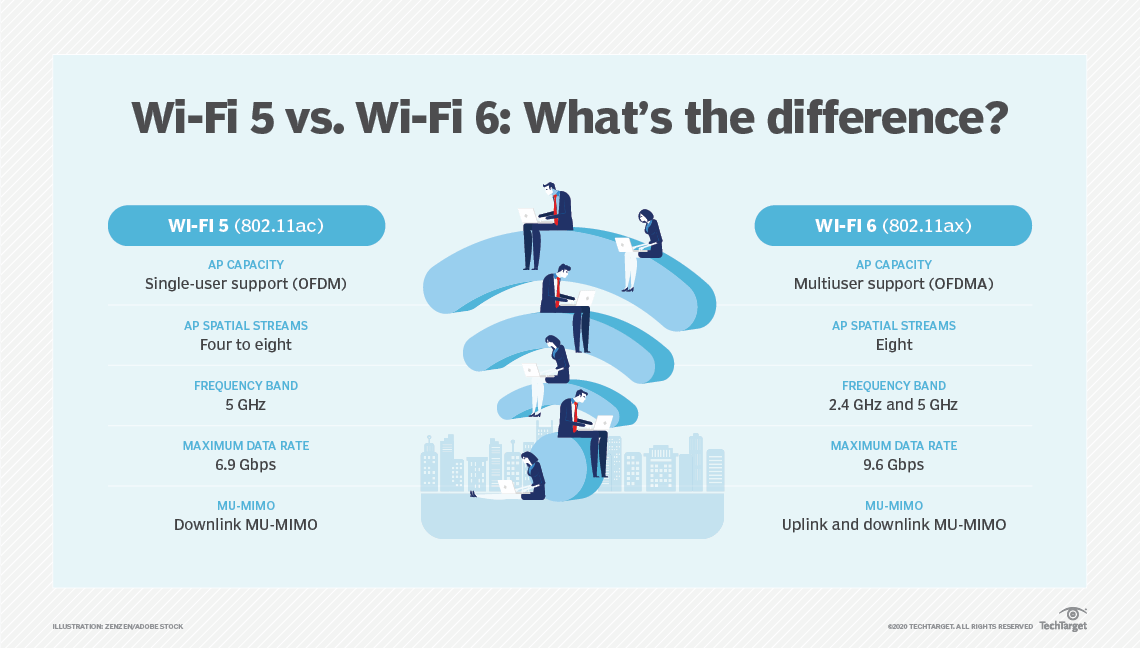
From a cost perspective, the comparison between Wi-Fi and private 5G is becoming harder to ignore.
Traditional setups may require dozens—or even hundreds—of Wi-Fi access points to maintain coverage across a large warehouse. In contrast, a private 5G deployment can often achieve the same or better performance with significantly fewer nodes.
The result is not just improved reliability, but a more scalable infrastructure. As robot fleets grow, the network can expand without becoming exponentially more complex.
Final Thought
Warehouse automation is no longer limited by robotics or AI—it is increasingly defined by connectivity.
As fleets grow larger and operations become more dynamic, the limitations of traditional Wi-Fi are becoming impossible to ignore. Private 5G offers a path forward, not just as a technological upgrade, but as a foundational shift in how automated systems are designed and deployed.
Because in the end, it’s not just about how smart your robots are.
It’s about whether they can stay connected.
















Greetings
Include pixelpaths.tech in Google Search Index and have it appear in web search results!
Register pixelpaths.tech at https://searchregister.info
Hello http://pixelpaths.tech,
I wanted to reach out to see if you’re open to exploring ways to grow your website traffic and boost online performance.
We offer customized SEO services that deliver measurable improvements.
Once you share your target keywords and target market, I’ll send a full proposal.
Best Regards,
Ashwani
Hello http://pixelpaths.tech,
I hope you’re doing well. I came across your business online and thought you might be interested in improving your visibility and traffic on search engines.
We specialize in helping businesses strengthen their online presence through effective SEO strategies.
Once you share your target keywords and target market, I’ll send a full proposal.
Warm regards,
Ashwani
Hey
Enlist pixelpaths.tech in GoogleSearchIndex to be visible in online search results!
Feature pixelpaths.tech now: https://searchregister.net
Hi,
I checked your website [http://pixelpaths.tech] and found opportunities to improve its search rankings.
We can help you grow your business with effective SEO strategies.
Would you like to review our packages?
Simply reply “Yes” or “Sure” if interested.
Regards.
Lisa
Hello http://pixelpaths.tech,
I hope you’re doing well. I came across your business online and thought you might be interested in improving your visibility and traffic on search engines.
We specialize in helping businesses strengthen their online presence through effective SEO strategies.
Once you share your target keywords and target market, I’ll send a full proposal.
Warm regards,
Aman
Hello http://pixelpaths.tech,
We can place your website on Google 1st page.
I can give you our Complete SEO Action Plan along with a customary reach and add great value to your product/ service.
I may send you a SEO Packages & price list. If interested.
Best Regards,
Ashwani
Online SEO Consultant
Hello
Add pixelpaths.tech in GoogleSearchIndex to be visible in google search results!
List pixelpaths.tech now: https://searchregister.info
Hi
Register pixelpaths.tech in GoogleSearchIndex and have it be visible in online search results!
Enlist pixelpaths.tech now: https://searchregister.org
Hello
Submit pixelpaths.tech in GoogleSearchIndex and have it appear in online search results!
Submit pixelpaths.tech now: https://searchregister.org
Greetings
List pixelpaths.tech in GoogleSearchIndex to show up in web search results!
Feature pixelpaths.tech now: https://searchregister.info
Hello
Register pixelpaths.tech in GoogleSearchIndex so it can be displayed in web search results!
Enlist pixelpaths.tech now: https://searchregister.org
Welcome from DreamProxies
Superb proxies offer: premium, fast speed and unlimited private proxies now even lower price!
50% Sales – for all private proxies:
https://tiny.cc/DreamProxies-Discount
Fully Anonymous, Ultimate Quality, Blazing Speed, Unlimited Usage, Reliable Servers, Low Prices, Bonus Discounts and much more
50% Sale for all proxies packages – by Dreamproxies.com
Hi
Include pixelpaths.tech in Google’s Search Index so it can be visible in web search results!
Include pixelpaths.tech here:
searchindex.pro