


















For decades, planning a trip followed a familiar pattern. You either spent hours searching across dozens of tabs—flights, hotels, reviews—or you handed the job to a travel agency and hoped they understood what you wanted.
That model is quietly disappearing.
In 2026, a new kind of travel experience is emerging, powered not by human agents, but by AI systems that can plan, optimize, and adapt your entire journey in real time. What used to take days of research or back-and-forth communication can now happen in minutes—often with better results.
And the shift isn’t loud. It’s happening quietly, one trip at a time.
From Search to Decision
Traditional travel planning has always been fragmented. You search for flights on one platform, compare hotels on another, read reviews somewhere else, and try to piece everything together yourself. Even experienced travelers often end up overwhelmed by choices.
AI changes that dynamic completely.
Instead of giving you hundreds of options, it gives you decisions. You input your preferences—budget, travel style, time constraints—and the system builds a complete itinerary tailored specifically to you. Flights are optimized not just for price, but for timing and convenience. Hotels are selected based on location, reviews, and your past preferences. Activities are arranged in a logical flow that actually makes sense when you’re on the ground.
The experience shifts from searching to selecting.
The End of One-Size-Fits-All Travel

One of the biggest limitations of traditional travel agencies is scalability. No matter how experienced the agent is, they are still working within time constraints and limited information about you.
AI doesn’t have that limitation.
It learns from your behavior. It understands whether you prefer fast-paced city exploration or slow, relaxed experiences. It knows if you prioritize food, culture, nature, or convenience. Over time, it builds a profile that allows it to generate increasingly accurate recommendations.
This is where AI begins to outperform human planning—not because it’s more “creative,” but because it’s more precise.
The result is a trip that feels less generic and more personal. Not a package, but an experience designed around you.
Travel Agencies vs AI: What Actually Changes?

At a glance, AI travel assistants might look like a direct replacement for traditional agencies. But the real difference lies in how they operate.
Travel agencies are built around service. You describe what you want, and someone translates that into bookings and plans. It’s a process that depends heavily on communication, interpretation, and manual effort.
AI, on the other hand, operates as a system. It processes data instantly, evaluates thousands of options simultaneously, and continuously updates recommendations based on real-time changes—prices, availability, even weather conditions.
This doesn’t just make it faster. It makes it adaptive.
A delayed flight, a sudden change in schedule, or a last-minute opportunity can be integrated into your plan almost instantly. Instead of re-planning your trip, the system adjusts it for you.
Real-Time Travel Is the New Standard
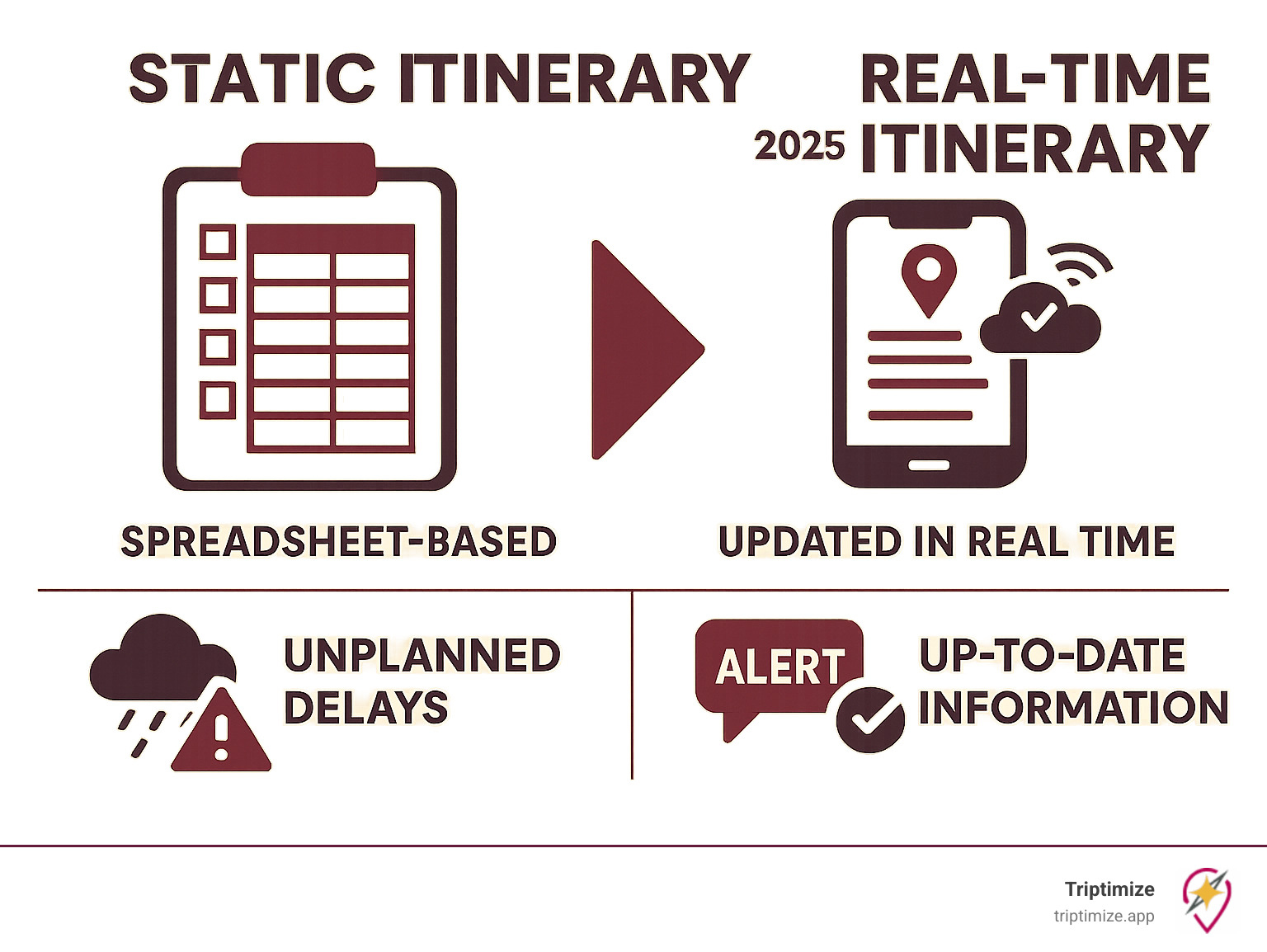
Perhaps the most important shift is what happens during the trip itself.
Traditional planning ends once the booking is complete. AI planning doesn’t.
Your itinerary becomes dynamic. If something changes—weather, traffic, availability—the system updates your schedule in real time. It can suggest alternative routes, recommend nearby experiences, or adjust reservations without requiring you to start over.
Travel stops being a fixed plan and becomes a flexible system.
And that changes how people experience travel entirely.
Final Thought
The rise of AI travel assistants isn’t just about convenience. It’s about redefining what travel planning actually is.
Instead of spending hours organizing details or relying on someone else to interpret your preferences, you now have a system that understands, adapts, and improves with every trip you take.
Travel agencies won’t disappear overnight. There will always be a place for human expertise, especially in complex or high-end experiences.
But for everyday travelers, the shift has already begun.
Because once you experience a trip that plans itself—and adjusts in real time—it’s hard to go back.