


























For years, airports have been defined by one thing: waiting. Waiting to check in, waiting at security, waiting to board. It’s a process that travelers have simply learned to tolerate.
But that experience is starting to change.
Across major global hubs, airports are undergoing a quiet transformation. The goal is not just efficiency, but invisibility—removing friction to the point where the process of moving through an airport feels almost seamless. And at the center of that transformation is a combination of AI, biometrics, and automation.
The result is something that looks less like an airport, and more like a technology platform.
The Disappearance of Check-In

The traditional check-in counter is slowly becoming obsolete.
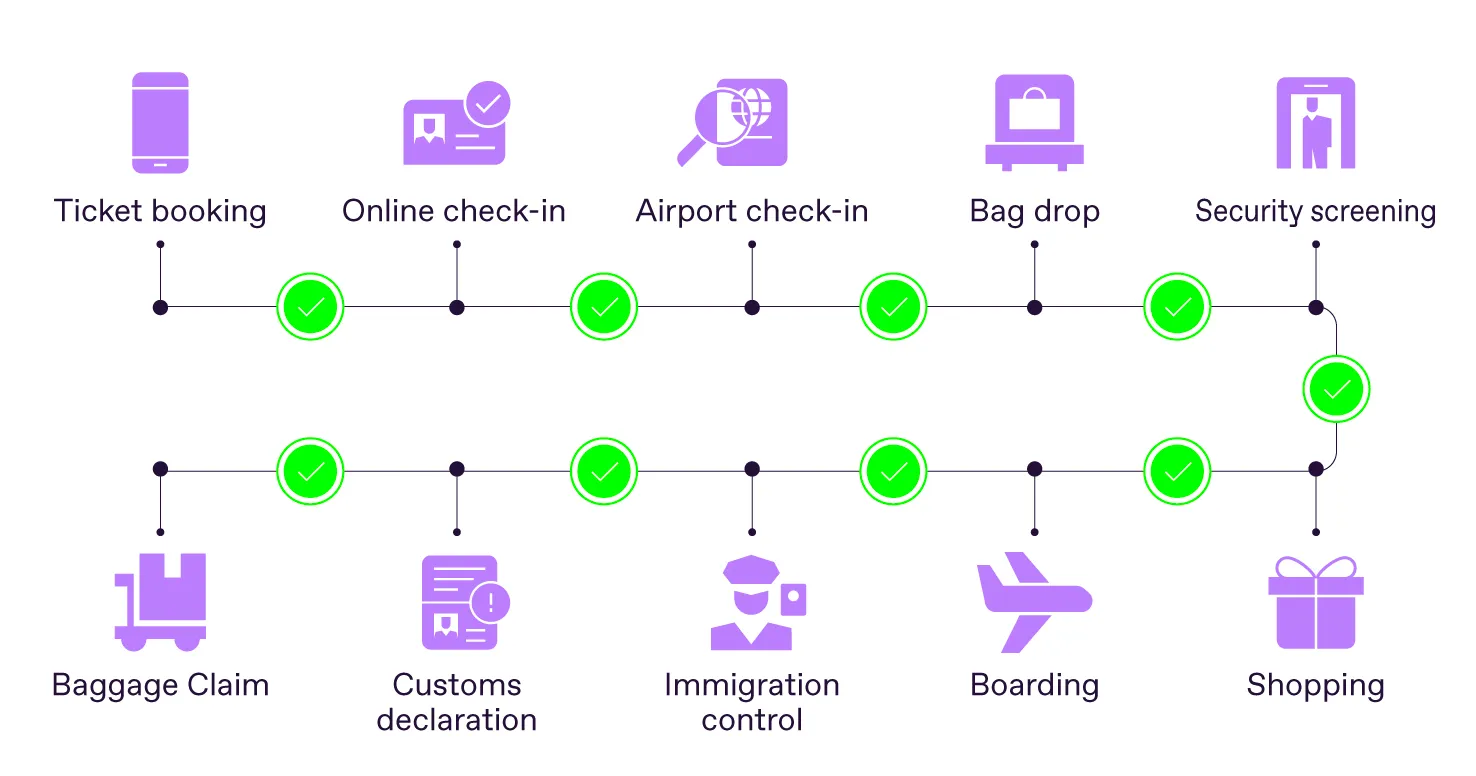
Instead of presenting passports, boarding passes, and documents at multiple checkpoints, travelers are beginning to move through airports using nothing more than their identity—verified through biometric systems. Facial recognition technology can confirm who you are in seconds, linking your identity to your booking, your luggage, and your boarding status.
What used to require multiple steps is now compressed into a single interaction.
You arrive at the airport, walk through a checkpoint, and the system recognizes you. No paper. No scanning. No lines. Your journey becomes a continuous flow rather than a series of interruptions.
Security That Moves at Machine Speed
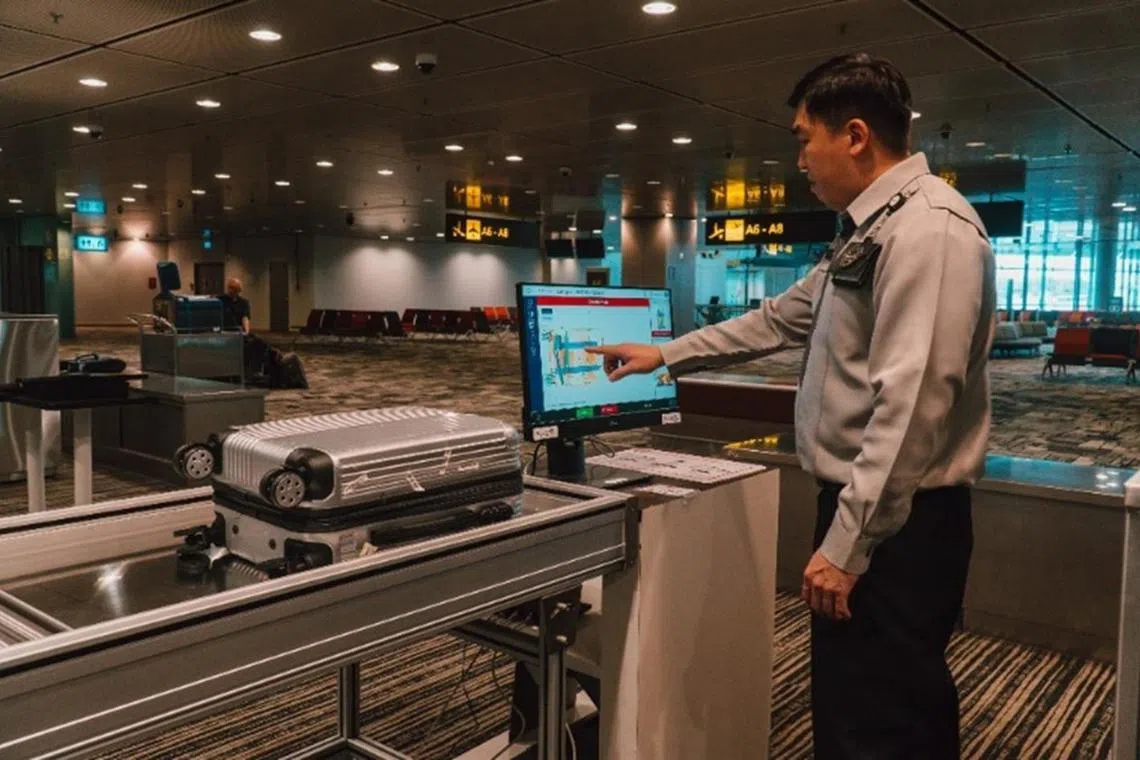
Security has always been one of the most time-consuming parts of air travel. But AI is beginning to change how that process works.
Instead of relying entirely on manual inspection, advanced scanning systems can now analyze baggage in real time, detecting potential threats with far greater accuracy. In many cases, travelers no longer need to remove laptops or liquids, as the system can interpret objects inside bags without disruption.
This doesn’t just make security faster—it makes it smarter.
AI systems can continuously learn from new data, improving detection capabilities over time. At the same time, automation reduces human error and allows security teams to focus on higher-risk situations instead of routine checks.
The experience shifts from inspection to intelligent screening.
Airports as Tech Ecosystems

What’s emerging is not just a faster airport, but a connected one.
Airports are evolving into full digital ecosystems where every part of the journey is integrated. Mobile apps provide real-time updates on gate changes, boarding times, and delays. Indoor navigation systems guide you through terminals with precision. Sensors track passenger flow to reduce congestion before it happens.
Even retail and dining are becoming part of this system, with personalized recommendations based on your location and schedule.
The airport is no longer just a place you pass through. It’s becoming an environment that responds to you.
The Trade-Off: Convenience vs Privacy
Of course, this level of automation raises an important question: what happens to your data?
Biometric systems rely on collecting and processing sensitive information. Facial recognition, travel patterns, and behavioral data all become part of the system. While this enables a smoother experience, it also introduces concerns around privacy, security, and control.
Airports and governments will need to balance efficiency with trust. Because while travelers want speed and convenience, they also want assurance that their data is handled responsibly.
Final Thought
The future of airports is not just about moving faster—it’s about removing friction entirely.
Check-in lines, paper tickets, and repetitive security steps are all artifacts of an older system. What’s replacing them is something more fluid, more intelligent, and more connected.
And once that system is fully realized, the idea of “waiting at the airport” may feel as outdated as printing your boarding pass.
Because in the end, the best travel experience is the one you barely notice at all.