
























Most people think about health in visible ways—what they eat, how they exercise, how long they sleep. But there’s something far more constant, far more overlooked, and completely invisible that affects your body every single day.
The air you breathe.
You don’t see it. You don’t feel it—until something is wrong. And yet, indoor air quality has a direct impact on how well you sleep, how clearly you think, and how your body functions over time.
In 2026, that invisible layer is finally becoming visible—thanks to a new generation of air quality technology.
The Problem You Can’t See

Indoor air is often worse than we assume.
Dust, PM2.5 particles, carbon dioxide, and other pollutants quietly accumulate in enclosed spaces. Unlike outdoor pollution, which is easier to notice, indoor air problems build slowly and silently.
You might feel tired without knowing why. You might wake up groggy even after a full night’s sleep. You might struggle to focus, assuming it’s stress or lack of rest.
But in many cases, the issue is environmental.
High CO₂ levels can reduce cognitive performance. Poor air circulation can affect sleep quality. Fine particles can impact respiratory health over time. The problem isn’t dramatic—it’s subtle. And that’s what makes it easy to ignore.
Making the Invisible Visible

This is where technology changes everything.
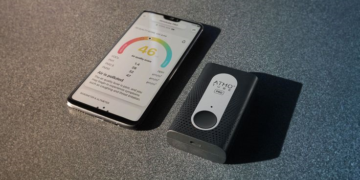
Modern air quality sensors can measure what your senses cannot. They track PM2.5 levels, CO₂ concentration, humidity, temperature, and more—delivering real-time data directly to your phone or display.
For the first time, you can actually see what your environment is doing to you.
Instead of guessing, you know when air quality drops. You know when a room becomes too stale. You know when conditions are affecting your comfort and performance.
That awareness alone is powerful.
Because once something becomes visible, it becomes manageable.
The Impact on Sleep and Focus
Air quality doesn’t just affect long-term health—it affects how you feel right now.
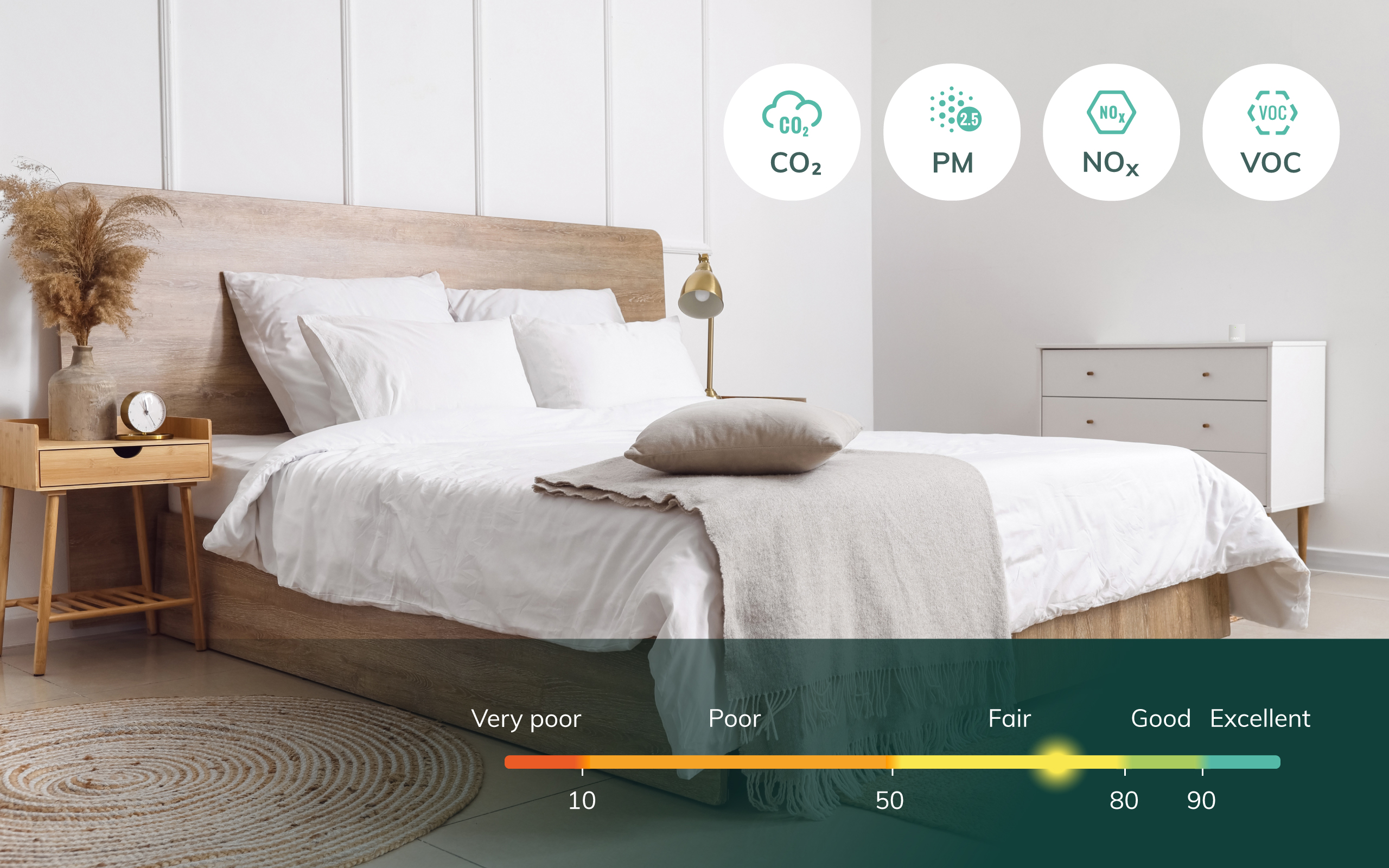
In the bedroom, poor ventilation can lead to restless sleep and reduced recovery. Elevated CO₂ levels during the night can leave you feeling tired, even after enough hours of rest.
In work environments, stale air can reduce concentration and slow down cognitive function. You might feel less productive without understanding why.
When air quality improves, the difference is often immediate.
Better sleep. Clearer thinking. More consistent energy.
Not because you changed your habits—but because you changed your environment.
From Awareness to Action

The next step is not just measuring—but responding.
Air quality tech is increasingly integrated with smart systems. Air purifiers can automatically adjust based on sensor data. Ventilation systems can activate when CO₂ levels rise. Even simple actions—like opening a window—become more intentional when guided by real data.
This creates a feedback loop.
Your environment changes. The system detects it. The system responds. And over time, your space becomes more stable, more comfortable, and more aligned with your well-being.
Final Thought
Health isn’t only shaped by what you do.
It’s shaped by what surrounds you.
Air quality has always been a hidden factor—one that quietly influences how you sleep, think, and feel. Technology is finally bringing that factor into the light.
Because once you can see the invisible, you can start to control it.
And sometimes, the smallest changes—like the air you breathe—make the biggest difference. 🌿