

























The Fujifilm X-T5 doesn’t try to compete in the usual way. It doesn’t chase the fastest autofocus numbers or the most aggressive video specs. Instead, it focuses on something that’s become surprisingly rare: the experience of taking photos.
After extended use across street photography, travel, portrait sessions, and landscape work, the X-T5 reveals a very deliberate identity. It’s not designed to automate everything—it’s designed to give you control, and then reward you for using it well.
This is a camera that asks a little more from you at the beginning. You need to learn its dials, understand its film simulations, and adapt to its way of working. But once that clicks, the payoff is significant. Shooting becomes more intentional, more tactile, and ultimately more satisfying.
It’s not the easiest camera to pick up—but it’s one of the most rewarding to grow into.
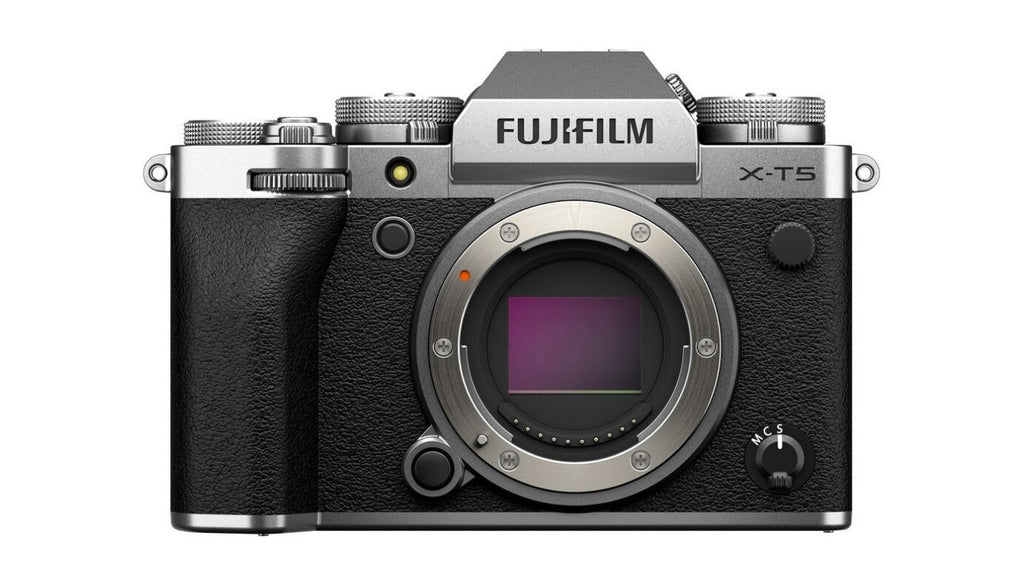
OVERVIEW IMAGE

Caption: A classic, dial-driven design that emphasizes control and awareness—before you even press the shutter.
DESIGN & BUILD


The X-T5’s design is one of its defining strengths—and also one of the reasons it isn’t for everyone.
At first glance, it looks retro. But in practice, it’s highly functional. The three dedicated dials on the top plate—ISO, shutter speed, and exposure compensation—change how you interact with the camera. Instead of diving into menus or relying on command dials, you’re physically setting exposure.
Combined with aperture rings on most Fujifilm XF lenses, you can see and adjust your entire exposure triangle without turning the camera on. That’s not just a design choice—it fundamentally changes your workflow. You start thinking about light and exposure more consciously.
The body itself is compact and lightweight at around 557g, which makes it ideal for travel or long shooting days. Unlike larger full-frame systems, you’re more likely to carry it everywhere—which often leads to better photos simply because you have it with you.
Build quality is excellent. The camera features extensive weather sealing (56 points), and in real-world use, it feels reliable in rain, dust, and colder environments. Buttons and dials have a solid, tactile response, reinforcing that sense of precision.
The three-way tilting screen deserves special mention. It’s not fully articulating like a vlog screen, but for photography, it’s arguably better. It allows low-angle, high-angle, and portrait-orientation shooting while keeping the camera aligned with your line of sight.
Overall, the X-T5 doesn’t just look different—it encourages a different way of shooting.
REAL-WORLD PERFORMANCE


Image Quality
The 40.2MP X-Trans CMOS 5 HR sensor is a major leap for Fujifilm’s APS-C lineup.
In real-world use, the increase in resolution is immediately noticeable—but more importantly, it doesn’t come with the usual drawbacks. Images remain clean, with controlled noise and strong dynamic range.
You get:
- Fine detail for landscapes and commercial work
- Flexibility for cropping without losing quality
- Natural color reproduction that doesn’t feel overprocessed
What stands out most is consistency. Whether you’re shooting in bright daylight or mixed lighting conditions, the files are predictable and easy to work with.
Film Simulations (A Creative Tool, Not a Filter)
Fujifilm’s film simulations are often misunderstood as presets—but in practice, they’re much more integrated into the shooting experience.
Modes like:
- Classic Chrome (muted, documentary feel)
- Classic Neg (high contrast, nostalgic tone)
- Nostalgic Neg (soft highlights, rich shadows)
- ACROS (deep monochrome with texture)
…are designed to be used at the moment of capture, not after.
This changes how you approach photography. Instead of shooting everything flat and deciding later, you commit to a look while composing the shot. It encourages a more deliberate style, closer to shooting film.
For many users, this becomes one of the biggest reasons to stay in the Fujifilm ecosystem.
Autofocus
Autofocus on the X-T5 is significantly improved compared to earlier models, especially with the addition of AI-based subject detection.
It can recognize:
- Faces and eyes
- Animals and birds
- Vehicles and moving objects
For everyday photography—street, portraits, travel—it performs reliably. Focus acquisition is quick, and tracking is stable enough for moderate motion.
However, it’s important to be realistic: this is not a top-tier sports camera. In fast, unpredictable action, it’s good—but not as consistent as flagship systems from Sony or Nikon.
Stabilization (IBIS)
The 7-stop in-body image stabilization is one of the most practical upgrades.
In real use, it allows:
- Handheld shooting at slower shutter speeds
- More flexibility in low light
- Reduced need for tripods in many scenarios
This isn’t just a spec—it actively expands what you can shoot comfortably.
VIDEO PERFORMANCE
The X-T5 is capable of strong video—but it’s clearly not designed around it.
You get:
- 6.2K recording
- Good color profiles (including film simulations)
- Reliable stabilization
But there are limitations:
- No fully articulating screen
- Fewer advanced video tools compared to hybrid-focused cameras
In practice, it’s a solid option for hybrid shooters—but not a primary choice for dedicated video creators.
FEATURES THAT MATTER
What makes the X-T5 compelling is how its features support real photography workflows.
The Pixel Shift Multi-Shot mode allows you to create 160MP images for controlled environments like product or landscape work. HEIF support offers better image quality with smaller file sizes, which is useful for storage and workflow efficiency.
AI-driven white balance improves consistency in mixed lighting, while subject detection reduces missed focus in everyday shooting.
Battery life is also notably improved, reaching around 740 shots—making it more reliable for long sessions.
TECH SPECS (ESSENTIALS)
| Category | Details |
|---|---|
| Sensor | 40.2MP APS-C X-Trans CMOS 5 HR |
| Processor | X-Processor 5 |
| Stabilization | 5-axis IBIS (up to 7 stops) |
| Autofocus | AI subject detection |
| Burst | Up to 15 fps (mechanical) |
| Video | 6.2K |
| Screen | 3-way tilting LCD |
| EVF | 3.69M-dot |
| Battery | ~740 shots |
| Weight | ~557g |
PROS & CONS
| Pros | Cons |
|---|---|
| Exceptional image quality for APS-C | Autofocus not class-leading |
| Film simulations enhance shooting experience | Not designed for video-first users |
| Lightweight and highly portable | EVF is good, not outstanding |
| Strong IBIS improves real-world usability | Requires time to master controls |
| Unique tactile shooting experience | Not beginner-friendly |
REAL USER FEEDBACK

User feedback around the Fujifilm X-T5 consistently reflects the same pattern: it’s a camera that grows on you.
Photographers upgrading from earlier X-T models appreciate the improved resolution and stabilization, but more importantly, they appreciate that the core shooting experience remains intact.
There’s also a recurring sentiment: it requires time to fully understand—but once it clicks, it becomes difficult to replace.
WHO SHOULD BUY THIS?
You should buy the X-T5 if:
- You prioritize photography over video
- You enjoy manual controls and tactile shooting
- You want strong image quality in a compact system
- You value color science and creative flexibility
Skip it if:
- You need top-tier autofocus for sports
- You want a video-first hybrid camera
- You prefer fully automated shooting
VERDICT
The Fujifilm X-T5 isn’t trying to be the most advanced camera—it’s trying to be the most engaging one.
It rewards intention, patience, and creativity in a way that most modern cameras don’t.
And for the right photographer, that matters more than anything else.
The Review
Fujifilm X-T5
Great camera! I'm using a 27 mm lens and it is a great combo especially if you are planning to use it for travel. I had initially considered the x100vi but when It came down to it I decided on the xt5 because I felt like I was getting more for my money, I would say it was a bit heavier than the x100vi but overall pretty happy