


























Introduction
In isolation, a $100 price increase for a console nearing its sixth year on the market might look like a late-cycle anomaly. But Sony’s decision to raise the price of the PlayStation 5 again—less than a year after its previous hike—signals something deeper than inflation or supply chain noise.
What’s unfolding is a structural shift in how hardware is prioritized across the global tech stack. The same memory chips that power consoles are now being aggressively diverted toward AI infrastructure—data centers, training clusters, and inference systems that command significantly higher margins. Gaming, once a flagship driver of consumer silicon demand, is increasingly being outcompeted by artificial intelligence.
This article argues that Sony’s price hike is not a tactical adjustment. It is a visible symptom of a broader realignment: one where entertainment hardware is being squeezed by the economics of AI, and where the future of gaming may be shaped less by players—and more by compute markets.
The Memory Bottleneck: Why AI Is Quietly Taxing Your Console

To understand why a mature product like the PlayStation 5 is getting more expensive, we need to look upstream—into the semiconductor supply chain, where memory has become one of the most contested resources in the AI era.
Modern AI systems, particularly large-scale models, are extraordinarily memory-hungry. Training and running these models requires vast amounts of high-bandwidth memory (HBM) and DRAM. As companies race to build AI infrastructure, memory manufacturers are reallocating capacity toward these higher-margin segments. The result is not just increased demand, but a reprioritization of supply.
For companies like Sony, this creates a cost squeeze. Consoles operate on relatively thin hardware margins, especially compared to enterprise-grade AI systems. When memory prices rise, there is limited room to absorb those costs without impacting profitability. Passing them on to consumers becomes less a choice and more a necessity.
What makes this moment unusual is timing. Historically, console prices decline over time as manufacturing efficiencies improve and component costs fall. The PS5 is defying that curve. Instead of benefiting from economies of scale, it is being pulled into a market where its components are more valuable elsewhere.
This is the hidden tax of AI: not just in cloud bills or enterprise spending, but in the everyday devices consumers buy. The cost of intelligence at scale is being redistributed across the hardware ecosystem—and gaming is now paying part of that bill.
From Consoles to Compute: Gaming’s Changing Position in the Tech Hierarchy

The price hike also reflects a deeper shift in where gaming sits within the broader technology hierarchy. For decades, gaming has been a primary driver of consumer hardware innovation—pushing advancements in graphics, processing power, and memory.
Today, that role is being overtaken by AI.
The most advanced chips are no longer designed with gaming as their primary use case. They are built for machine learning workloads. Companies like NVIDIA, AMD, and others are optimizing architectures for tensor operations, parallelism, and data throughput—requirements that align more closely with AI than with traditional gaming.
This doesn’t mean gaming is becoming irrelevant. But it does mean it is no longer the center of gravity.
Even within gaming itself, the model is shifting. Titles like Fortnite are less dependent on hardware upgrades and more on continuous content updates, live events, and cross-platform accessibility. The experience is becoming decoupled from the device.
Sony’s challenge, then, is twofold. It must maintain the relevance of a hardware-centric ecosystem in a world increasingly defined by cloud and services. And it must do so while competing for components against industries willing to pay significantly more for them.
The result is a paradox: gaming is bigger than ever as a cultural and economic force, yet the devices that power it are under increasing pressure from forces outside the industry.
The Late-Cycle Console Problem: When Aging Hardware Meets Rising Costs
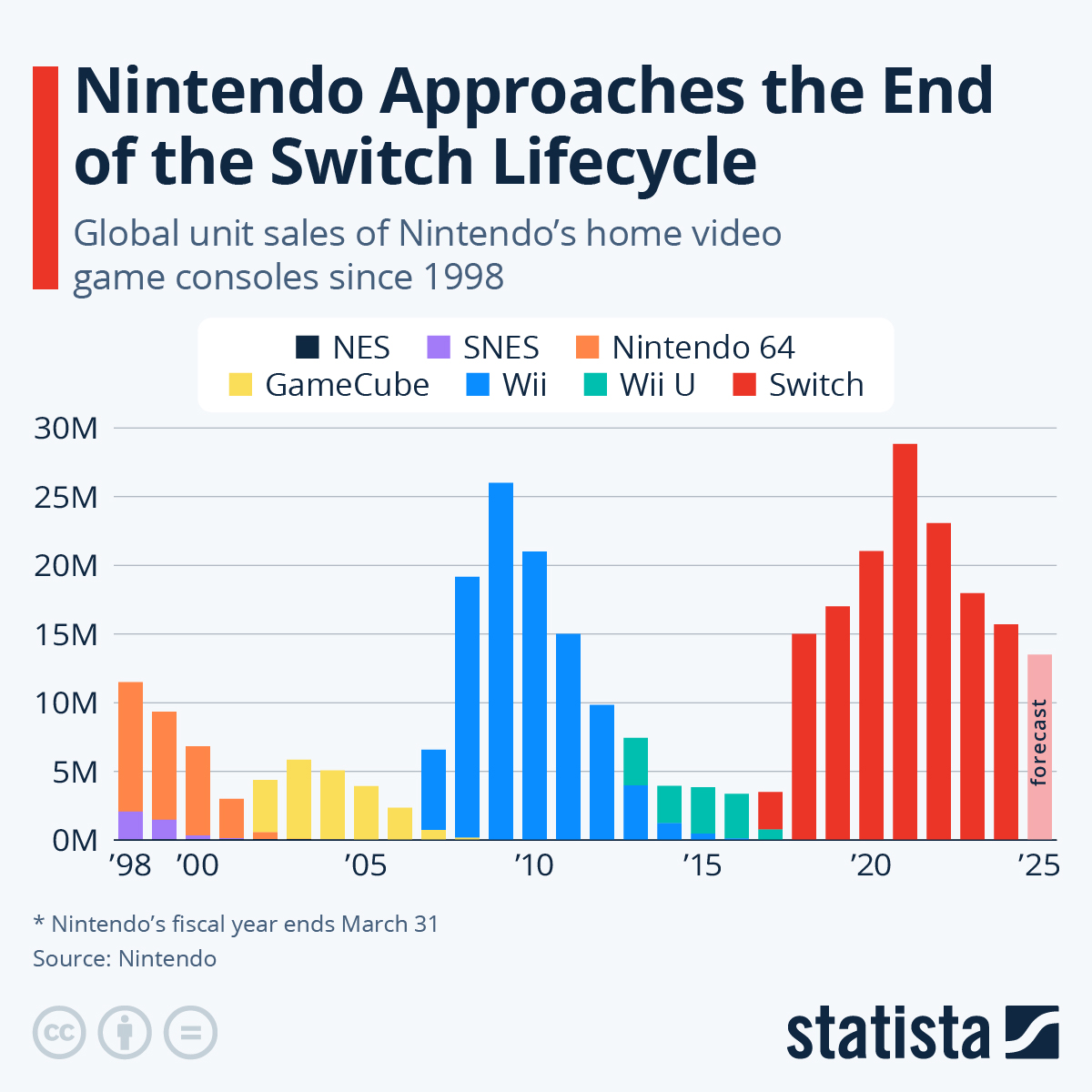
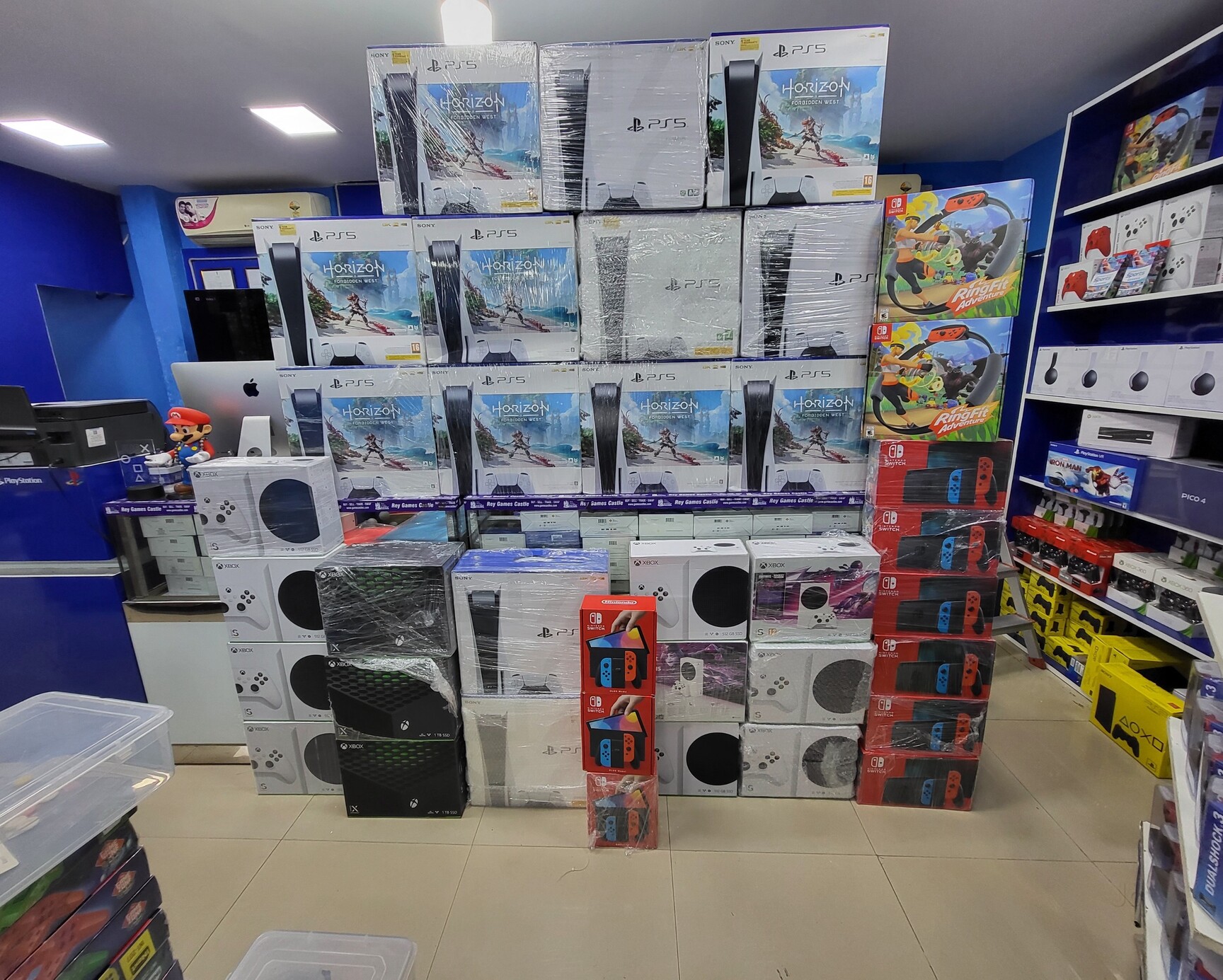
There is also a lifecycle dimension to Sony’s decision that complicates the narrative further.
The PlayStation 5 is no longer a new product. It has been on the market for around six years—a stage where consoles typically enter a price-reduction phase to expand their install base and maximize software sales. Instead, Sony is raising prices, potentially dampening demand at a time when growth is already slowing.
Recent data underscores this tension. PS5 sales declined 16% year-over-year during a key holiday quarter, suggesting that the console may be approaching saturation in core markets. At the same time, competitors like Microsoft have also adjusted pricing for their Xbox Series X lineup, indicating that this is not an isolated move.
The introduction of higher-end variants like the PS5 Pro further complicates the equation. These premium models push the average selling price higher but also risk fragmenting the market. Consumers are being asked to pay more—not just for entry-level access, but for the “best” experience.
In a traditional cycle, this might be manageable. But in a market where hardware costs are rising instead of falling, and where alternative gaming models (cloud, mobile, PC) are increasingly viable, the risk is that consoles begin to lose their value proposition.
Sony is effectively navigating a late-cycle console in an early-stage AI economy. The two timelines are colliding—and the result is pricing behavior that would have been unthinkable a decade ago.
Ripple Effects: What Higher Console Prices Mean for the Industry
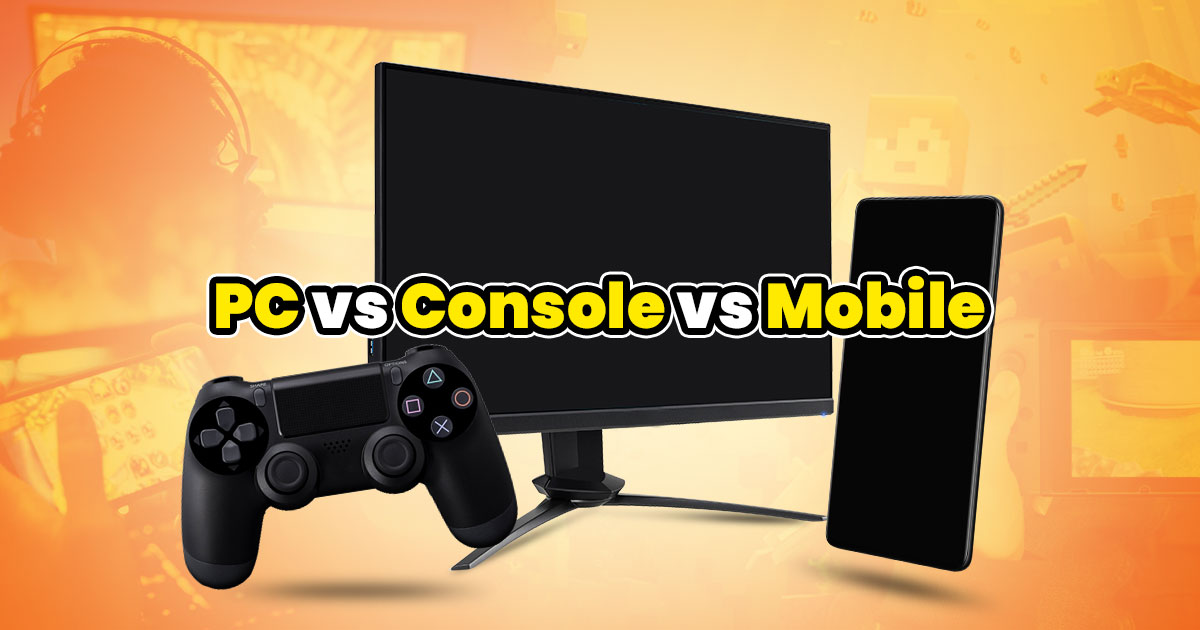

The implications of rising console prices extend beyond Sony and its balance sheet. They ripple across the entire gaming ecosystem.
For consumers, higher upfront costs may accelerate shifts toward alternative platforms. PC gaming, while also affected by component prices, offers more flexibility and upgrade paths. Mobile gaming continues to dominate in terms of user base and accessibility. Cloud gaming, though still maturing, promises hardware-agnostic access—an appealing proposition if console prices continue to climb.
For developers, the equation becomes more complex. A smaller or slower-growing console install base can impact the economics of game development, particularly for high-budget AAA titles that rely on large audiences to recoup costs. This could reinforce the industry’s shift toward live-service models, where revenue is generated over time rather than at launch.
There is also a feedback loop at play. If higher prices reduce console adoption, developers may prioritize platforms with larger audiences. This, in turn, can make consoles less attractive to consumers, further impacting adoption.
At the same time, companies like Epic Games have already pointed to sluggish console sales as a contributing factor in broader industry adjustments, including layoffs. The health of the console market is not just a hardware issue—it is a foundational pillar of the gaming economy.
What we are seeing, then, is not just a price increase. It is a stress test of the console model itself.
Conclusion: Gaming in the Age of AI Scarcity
Sony’s decision to raise PlayStation 5 prices again is easy to frame as a reaction to rising costs. But that framing misses the larger story.
We are entering an era where compute is the most valuable resource in the technology industry. AI has become the dominant consumer of that resource, reshaping supply chains, pricing structures, and strategic priorities. In this new hierarchy, consumer entertainment hardware is no longer guaranteed preferential treatment.
For gaming, this presents both a challenge and an inflection point. The traditional console model—fixed hardware, declining prices, growing install base—is being disrupted by forces it does not control. At the same time, new models of distribution and engagement are emerging that may reduce reliance on hardware altogether.
The question is not whether consoles will survive. They will. The question is what role they will play in a world where the most powerful machines are no longer in living rooms, but in data centers—and where the economics of those machines are redefining everything downstream.
In that sense, the PlayStation 5 price hike is not just about Sony. It is about the cost of being a consumer in an AI-first world—and the subtle ways that cost is beginning to surface.