



















Introduction
The idea of celebrity has always been shaped by technology. From Hollywood’s studio system to Instagram’s creator economy, each shift in media infrastructure has redefined who gets attention—and how that attention is monetized. Now, a new contender is emerging that challenges the very premise of human-driven fame: virtual influencers.
These AI-generated personalities—crafted through a combination of 3D modeling, machine learning, and narrative design—are no longer experimental novelties. They are brand ambassadors, content creators, and, increasingly, cultural figures with audiences rivaling human influencers. The central shift is not merely aesthetic; it is structural. Virtual influencers are transforming fame from something organic and unpredictable into something engineered, scalable, and controllable.
This article explores how virtual influencers are reshaping digital culture, why brands are rapidly embracing them, and what this shift reveals about the future of identity, authenticity, and influence.
The Rise of Synthetic Fame
Virtual influencers did not appear overnight; they emerged from the convergence of gaming engines, social media algorithms, and advancements in generative AI. Early examples like Lil Miquela blurred the line between fiction and reality, presenting a fully fabricated persona that interacted with followers as if she were human. What began as a curiosity quickly evolved into a viable media format.
The key driver behind this rise is control. Unlike human influencers, virtual personalities do not age, scandalize unpredictably, or deviate from brand messaging. Every post, collaboration, and public interaction is curated with precision. This makes them not just influencers, but programmable media assets.
As platforms like Instagram and TikTok prioritize engagement over authenticity, audiences have shown a surprising willingness to suspend disbelief. The metric that matters is not whether the influencer is real, but whether the content is compelling. In this environment, synthetic personalities can compete—and often outperform—their human counterparts.
Why Brands Are Betting on Digital Humans
For brands, virtual influencers represent a shift from partnership to ownership. Traditional influencer marketing involves negotiating with individuals who have their own identities, values, and risks. Virtual influencers eliminate that uncertainty. They are fully controlled intellectual property, allowing brands to align messaging with unprecedented consistency.
This control translates directly into economic efficiency. Campaigns can be produced without travel, scheduling conflicts, or human limitations. A virtual influencer can appear in multiple markets simultaneously, speak multiple languages, and adapt instantly to different cultural contexts. In a globalized digital economy, this scalability is a powerful advantage.
Moreover, virtual influencers are inherently adaptable to emerging formats. As augmented reality, virtual reality, and metaverse-like environments gain traction, these digital personalities can seamlessly transition across platforms. They are not bound to physical constraints, making them ideal for a future where content is increasingly immersive and interactive.
The Illusion of Authenticity in a Post-Human Era

One of the most striking aspects of virtual influencers is how they challenge traditional notions of authenticity. Historically, influence has been tied to perceived realness—the idea that audiences connect with genuine human experiences. Virtual influencers disrupt this assumption by proving that authenticity can be simulated.
These digital personas often come with backstories, personalities, and even social causes. They “experience” life events, share opinions, and engage with followers in ways that mimic human behavior. The result is a form of narrative authenticity: audiences connect not because the influencer is real, but because the story feels coherent and emotionally resonant.
This raises deeper questions about the nature of trust in digital environments. If audiences are willing to engage with—and even form attachments to—entities they know are artificial, the definition of authenticity shifts from truth to consistency. In other words, what matters is not whether something is real, but whether it behaves in a way that feels believable over time.
Redefining the Creator Economy
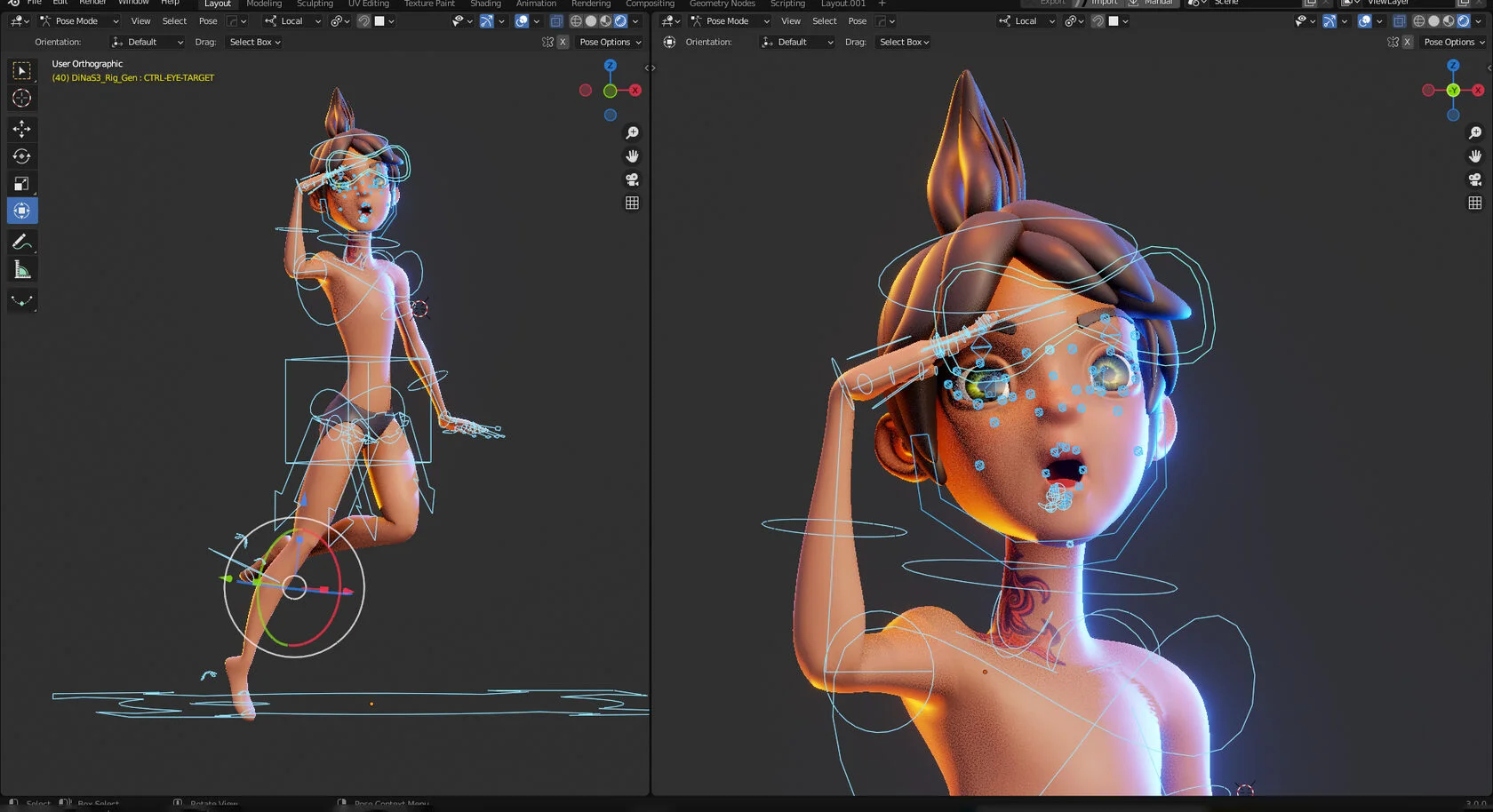
The rise of virtual influencers is not just a cultural phenomenon; it is an economic restructuring of the creator ecosystem. Behind every successful virtual persona is a team of designers, writers, data analysts, and engineers. Influence becomes a collaborative production process rather than an individual endeavor.
This model mirrors the evolution of Hollywood, where studios manufacture stars through coordinated efforts across multiple disciplines. However, virtual influencers take this a step further by eliminating the need for a human subject altogether. The “talent” is software, and the value lies in the intellectual property.
For human creators, this introduces both competition and opportunity. On one hand, brands may favor virtual influencers for their reliability and scalability. On the other hand, creators can leverage similar tools to enhance their own content, blending human authenticity with AI-driven production. The future of the creator economy may not be a binary choice between human and virtual, but a hybrid model that combines both.
Ethical and Cultural Implications
As virtual influencers become more prevalent, they introduce a range of ethical challenges that extend beyond marketing. Questions around transparency, consent, and representation are increasingly difficult to ignore. Should audiences always be clearly informed when they are interacting with a non-human entity? And who is accountable when a virtual influencer spreads misinformation or promotes harmful ideas?
There is also the issue of representation. Virtual influencers can be designed to embody idealized versions of beauty, culture, and identity—often without the lived experiences that accompany them. This raises concerns about cultural appropriation and the commodification of identity, particularly when digital personas are used to represent marginalized communities.
Regulation in this space remains limited, but pressure is mounting. As the line between real and artificial continues to blur, platforms and policymakers will need to establish guidelines that protect users without stifling innovation. The challenge lies in balancing creative freedom with ethical responsibility in an increasingly synthetic media landscape.
Conclusion
Virtual influencers are not simply a trend; they are a signal of a deeper transformation in how society constructs and consumes identity. By turning influence into a programmable asset, they shift the balance of power from individuals to the systems that create and control them.
The implications extend far beyond marketing. As digital personas become more sophisticated, they will increasingly shape culture, norms, and even personal relationships. The question is no longer whether virtual influencers will coexist with human celebrities, but how the definition of celebrity itself will evolve in response.
In a world where authenticity can be engineered and fame can be manufactured, the future of influence may be less about who you are—and more about how convincingly you can be designed.