



















The future of online shopping may soon be powered by artificial intelligence. According to Harley Finkelstein, the president of Shopify, AI-powered shopping agents could fundamentally reshape how consumers discover and buy products online.
Speaking at the Upfront Summit, Finkelstein described a future where intelligent AI assistants act as personal shoppers, helping customers search, compare, and purchase products automatically.
The shift could dramatically change how digital commerce platforms operate and how consumers interact with online stores.
AI Agents Could Become the New Personal Shoppers

The concept behind agentic shopping is simple: AI systems will learn a user’s preferences and make personalized purchasing decisions on their behalf.
Instead of manually browsing online stores, consumers could rely on intelligent agents to:
- discover new products
- compare prices across retailers
- recommend items based on preferences
- automatically complete purchases
Finkelstein suggested that these AI systems will behave more like trusted personal shoppers than traditional search engines.
Why AI Agents Could Improve Product Discovery


One of the biggest problems in e-commerce today is product discovery. Many merchants struggle to get their products noticed in crowded online marketplaces.
Finkelstein believes AI shopping agents could solve this problem by prioritizing context and user preferences, rather than simply ranking products based on popularity or advertising.
For example, if a shopper prefers a particular brand — such as running shoe company On Running — the AI agent would prioritize showing those products in future searches.
This approach could help smaller brands compete with large retailers such as Foot Locker, which often dominate traditional search results.
Shopify Is Building Its Own AI Tools
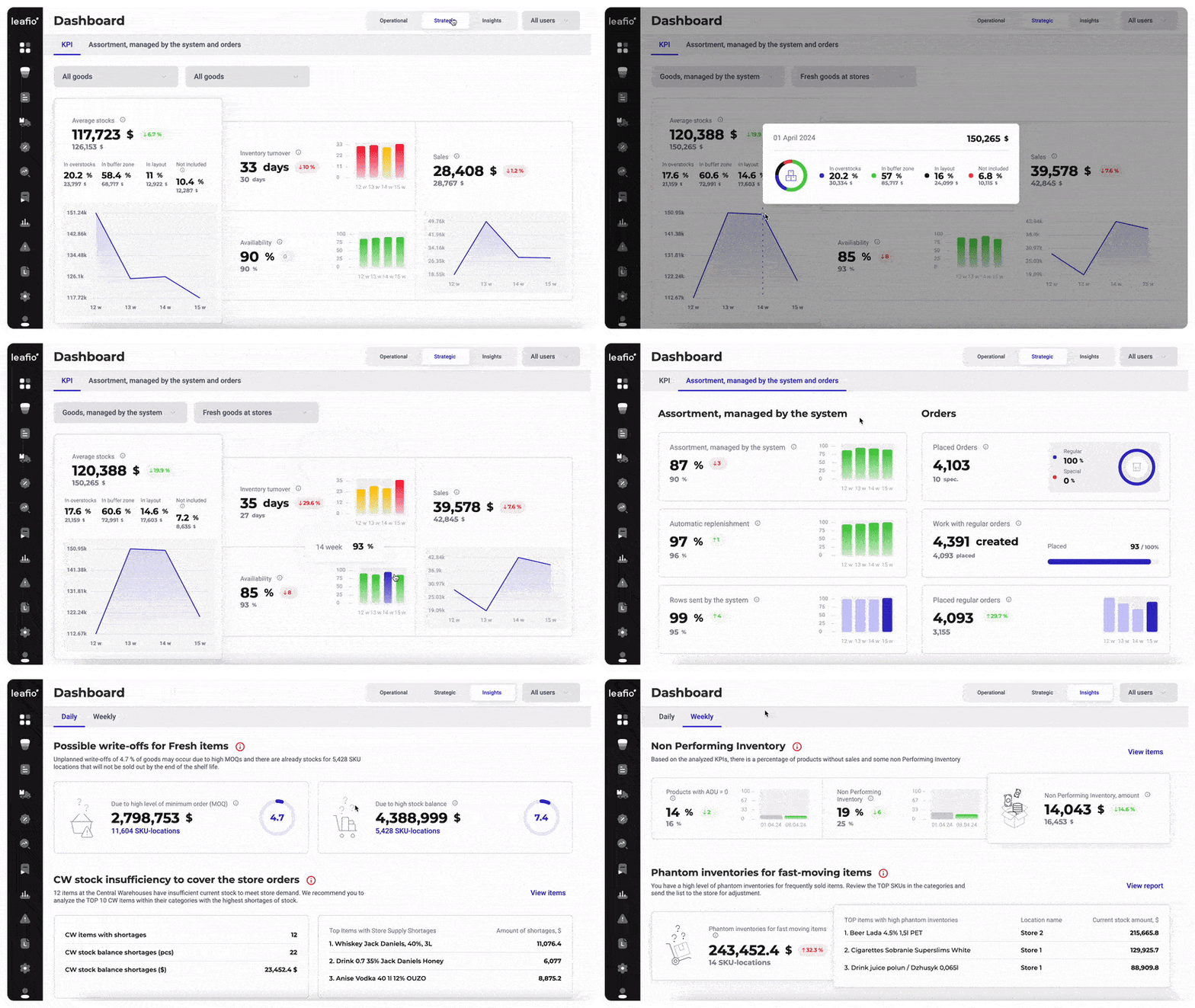
To prepare for the rise of AI-driven commerce, Shopify is already developing several new AI tools.
One of the most notable is Sidekick, an AI assistant designed to help merchants manage their online stores more efficiently. The company is also developing AI agents capable of handling customer support and analyzing merchant data.
Additionally, Shopify is building protocols that allow AI systems to better understand product information, inventory, and other merchant data — an essential step for enabling AI shopping assistants to interact with online stores.
AI Could Expand the Reach of Online Commerce
Despite the growth of online retail, only about 18% of retail purchases in the United States currently happen online, according to Finkelstein.
AI-powered shopping agents could significantly increase that number by simplifying the purchasing process and helping consumers find products more efficiently.
For merchants, the shift could open new opportunities — especially for smaller businesses that struggle to compete with larger brands in traditional search-driven marketplaces.
If AI agents become a common interface for online shopping, platforms like Shopify may play a central role in shaping the next era of digital commerce.