

Over the past few years, tech enthusiasts may have noticed the term “Silicon-Carbon Battery” appearing with increasing frequency in smartphone spec sheets. This technology exploded onto the scene as major Chinese manufacturers like Honor, Oppo, and Xiaomi enthusiastically embraced it. Now, Samsung has joined the fray, integrating silicon-carbon technology into the batteries of its foldable flagships, the Galaxy Z Fold 8 and Z Fold 8 Ultra.
Silicon-carbon batteries offer vastly superior capacity compared to traditional lithium-ion cells, ushering in an era where many phones can confidently boast true two-day battery life. As these cells become the standard in Asian smartphones and increasingly make their way into Western handsets, key questions arise: What makes silicon-carbon batteries so special? Why do they deliver such dramatically higher battery life, and why might this come at the direct expense of your phone's overall lifespan?
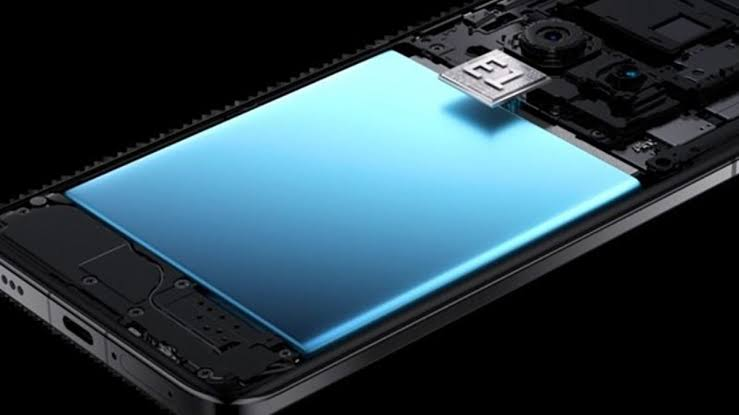
1. How Batteries Work: The “Water Park” Metaphor
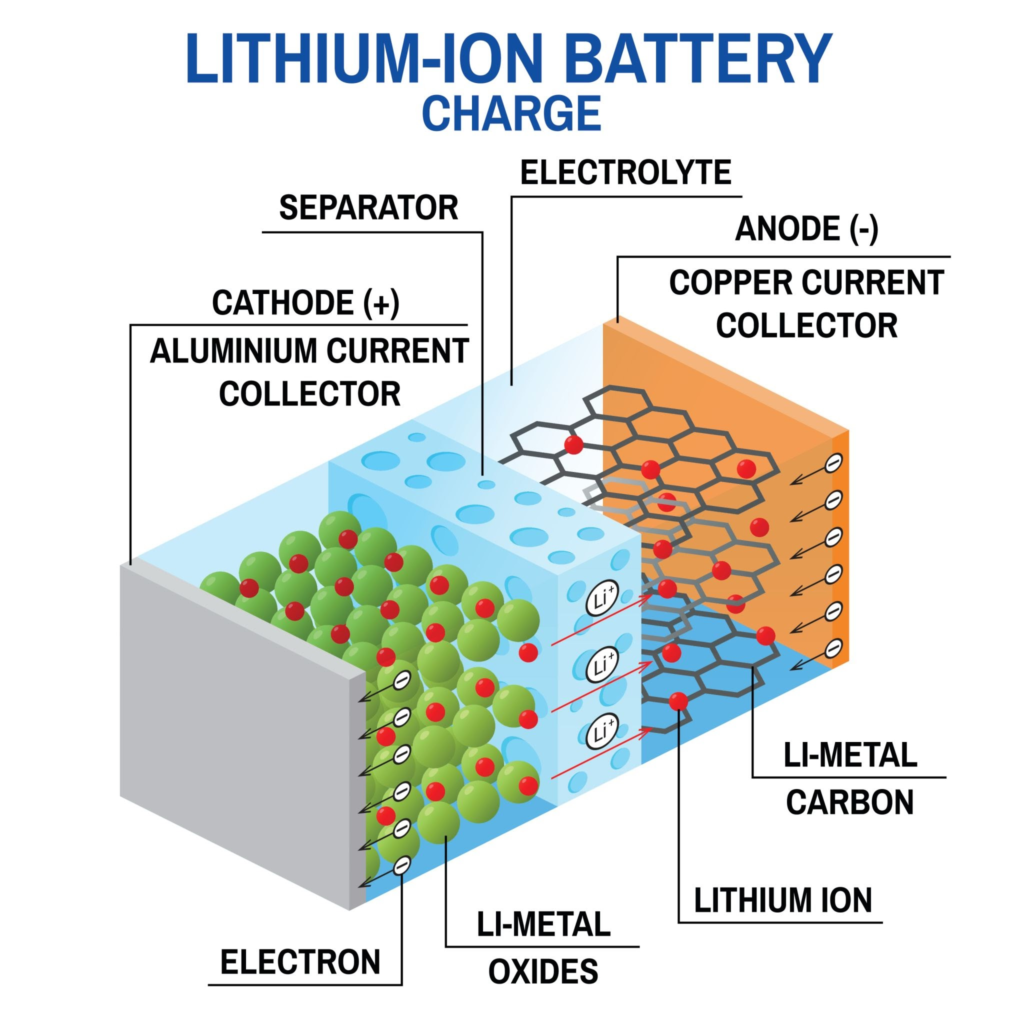
To understand the breakthrough of silicon-carbon, it helps to review the basic working principles of a chemical battery. At its core, every battery consists of three fundamental parts:
- Anode (Negative Electrode)
- Cathode (Positive Electrode)
- Electrolyte (The conductive medium sitting between them)
When a battery is fully charged, all the electrons are held in the anode. As you use your device, the anode slowly releases these electrons, which travel toward the cathode. The flow of electrons through the electrolyte triggers a series of electrochemical reactions that release usable power. When plugged into a charger, the process reverses: electrons are forced back into the anode.
The Water Park Analogy:
Think of a battery as a massive water slide at an aqua park on a scorching summer day.
- Hundreds of screaming kids (the electrons) are lined up at the top of the slide (the Anode), eager to rush down to the bottom (the Cathode).
- The water flowing down the slide (the Electrolyte) facilitates this movement from top to bottom.
- Once at the bottom, the kids race back up the stairs to slide down again (Recharging).
Eventually, however, the park’s water reserves deplete. When the slide gets too dry to slide upon, it can no longer be used—that is precisely when a battery degrades and loses its ability to store and release energy efficiently.
2. Traditional Lithium-Ion and the “Graphite Bottleneck”
For the past two and a half decades, Lithium-Ion Batteries have dominated consumer electronics—powering everything from smartphones, tablets, and laptops to electric vehicles (EVs) and home energy storage systems. They owe their ubiquity to being lightweight, energy-dense, and capable of enduring hundreds of charge/discharge cycles before degrading significantly.
A standard lithium-ion cell typically comprises:
- Anode: Graphite powder.
- Cathode: Lithium Iron Phosphate (LFP) powder or other transition metal lithium compounds.
- Electrolyte: Ethylene carbonate solution.
Dr. Ruth Sayers—a battery chemistry expert with research stints at Imperial College and the University of Liverpool, and currently CEO of AmpliSI (a company producing silicon for silicon-carbon batteries)—explains that the industry has spent the last 20 years optimizing the cathode and electrolyte:
“Everything else has been optimized and developed as much as it can,” she noted. “We've been using the same graphite anode in lithium-ion batteries for decades. At this point, those graphite anodes are the element limiting battery performance, and silicon is considered the challenger to graphite.”
3. The Reality of Silicon-Carbon Batteries: Misnomer, Structure & Evolution
It is important to clarify that calling these cells “silicon-carbon batteries” is somewhat of a misnomer. In reality:
- The Cathode still relies on lithium-based materials.
- The Anode is not made entirely of silicon-carbon because current laws of physics do not permit it. Instead, manufacturers mix a small percentage of silicon-carbon into the existing graphite structure.
This is precisely the strategy adopted by Samsung and other smartphone makers. On the official product pages for the Galaxy Z Fold 8 and Fold 8 Ultra, Samsung still classifies the battery type as “Lithium-ion.” However, the company confirmed that it introduced silicon-carbon material to boost energy density, citing clear engineering advantages. Under current industry standards, this blend is classified as a silicon-carbon battery.
History and “Drop-in” Manufacturing
Dr. Juho Heiska, Head of R&D at Finland’s Seinäjoki University of Applied Sciences, points out that adding silicon to battery anodes is not entirely new:
“Tesla has already used something like a 3-to-5-percent mix in some of its NCA [nickel cobalt aluminum] models,” he explained. (Tesla has been adding silicon-carbon to its cells since at least 2016, according to reports by the Los Angeles Times).
What has changed fundamentally is that manufacturing, chemical, and engineering processes have evolved to accommodate significantly higher proportions of silicon-carbon.
Many battery manufacturers now utilize “Drop-in” materials that integrate seamlessly into pre-existing production lines:
Even though this chemical slurry can be processed on existing machinery, silicon-carbon cells remain far more expensive to manufacture. This makes smartphones the ideal proving ground, as the unit cost of a phone battery is relatively small compared to the overall price of the device (unlike the prohibitive costs of equipping an EV with an oversized pack).
4. Key Advantages of Silicon-Carbon Batteries
| Feature / Metric | Traditional Lithium-Ion (Graphite) | Silicon-Carbon Battery |
| Theoretical Anode Capacity | ~330 mAh/g | ~3,300 mAh/g (10x increase for the silicon component) |
| Electrochemical Reaction | Intercalation (Ions slip between layers) | Alloying (Lithium-Silicon compound formation) |
| Charging Speed | Restricted by rigid graphite layers | Faster (Silicon lithiates first) |
| Form Factor / Density | Thicker & heavier at high capacities | Significantly thinner, lighter & more compact |
A. Massive Capacity in a Slimmer Profile
Dr. Ruth Sayers notes that the underlying chemistry is fundamentally different. Instead of lithium ions merely resting between graphite layers, a chemical reaction called alloying occurs, forming various lithium-silicon compounds. This alloying process allows the anode to bind and store dramatically more lithium per gram.
- Real-World Example: The OnePlus 15 is only a millimeter or two thicker than an iPhone 17, yet it houses a massive 7,300 mAh silicon-carbon battery that lasted an astonishing 38.5 hours in Engadget's video rundown tests.
B. Dramatically Faster Charging
According to Dr. Heiska, standard graphite batteries struggle with ultra-fast charging because lithium ions face physical friction when squeezing between graphite layers. Silicon absorbs lithium faster and “lithiates” first, making it significantly easier to pump high current into the cell quickly.
C. Abundant and Low-Cost Raw Materials
Silicon is one of the most abundant elements on Earth. Transitioning to silicon helps reduce reliance on complex, geopolitically risky supply chains associated with specific mined minerals.
5. The Dark Side: 400% Volume Expansion & Longevity Trade-Offs
Despite its impressive advantages, silicon-carbon faces a severe physical handicap: Volumetric Deformation.
When an electrical charge is introduced into an anode material, it causes physical swelling. While traditional graphite expands by roughly 10% during a full charge/discharge cycle, silicon expands by a staggering 400%.
Volumetric Expansion During Full Charge:
Graphite: [==] 10%
Silicon:  [============================================================] 400%
When a material inside a tightly sealed smartphone battery swells to four times its original volume, it places immense mechanical stress on the cell, cracking the Solid Electrolyte Interphase (SEI) layer and causing rapid capacity degradation.
Dr. Heiska highlights this reality: “If you made a battery purely out of silicon, its cycle life would be so poor that nobody would buy those products.”
The Longevity Penalty: Samsung’s Regulatory Filings
Samsung has taken a conservative approach, using smaller amounts of silicon to make its batteries thinner rather than ultra-capacious.
However, official regulatory filings submitted by Samsung to the European Union (EU) reveal the longevity trade-off:
- Previous Generation (Lithium-ion): Rated for 2,000 charge cycles.
- New Generation (Silicon-Carbon on Z Fold 8 / 8 Ultra): Rated for 1,200 charge cycles—a significant 40% drop in total lifespan.
Future Research
Engineers and electrochemists are actively working to mitigate this degradation. Ongoing projects explore novel manufacturing techniques and chemical additives, such as fluorophosphates, to stabilize the anode structure and strike an optimal balance between boosted energy density and long-term lifespan.
6. Conclusion: The Ideal Proving Ground
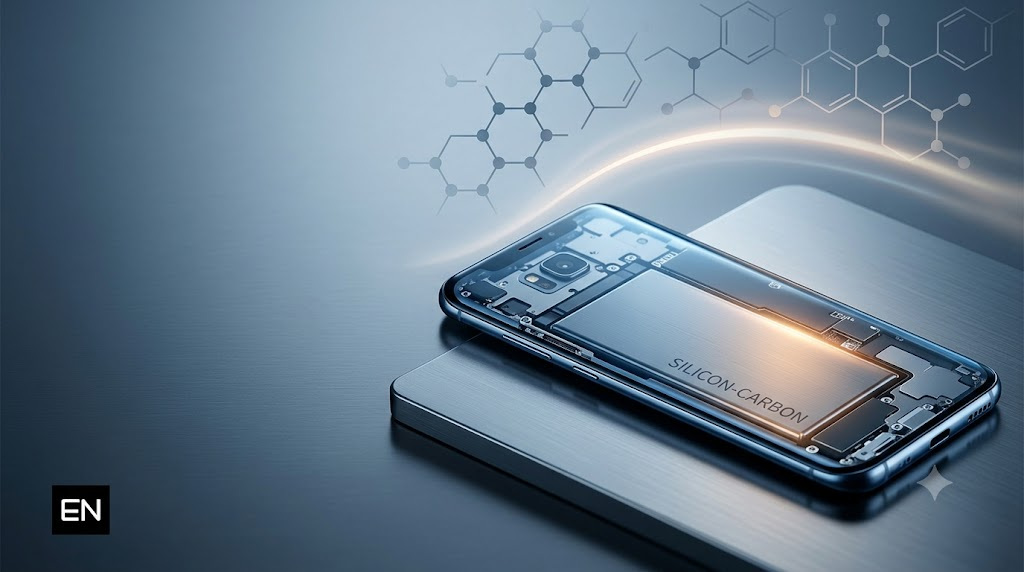
The inherent trade-off between higher capacity and shorter cycle life makes smartphones the perfect market for silicon-carbon technology to mature.
- Upgrade Cycles: Most consumers replace their primary smartphones every 2 to 4 years anyway (well within the 1,200-cycle threshold).
- Shift in Charging Habits: If a device easily delivers two days of usage per charge, users plug their phones in half as often. This effectively doubles the real-world time required to hit 1,200 total charge cycles.
Silicon-carbon batteries may not be a permanent magic bullet, but they currently represent the most practical bridge forward—offering unprecedented multi-day power in ultra-thin devices, provided users accept a modest trade-off in long-term battery durability.