


















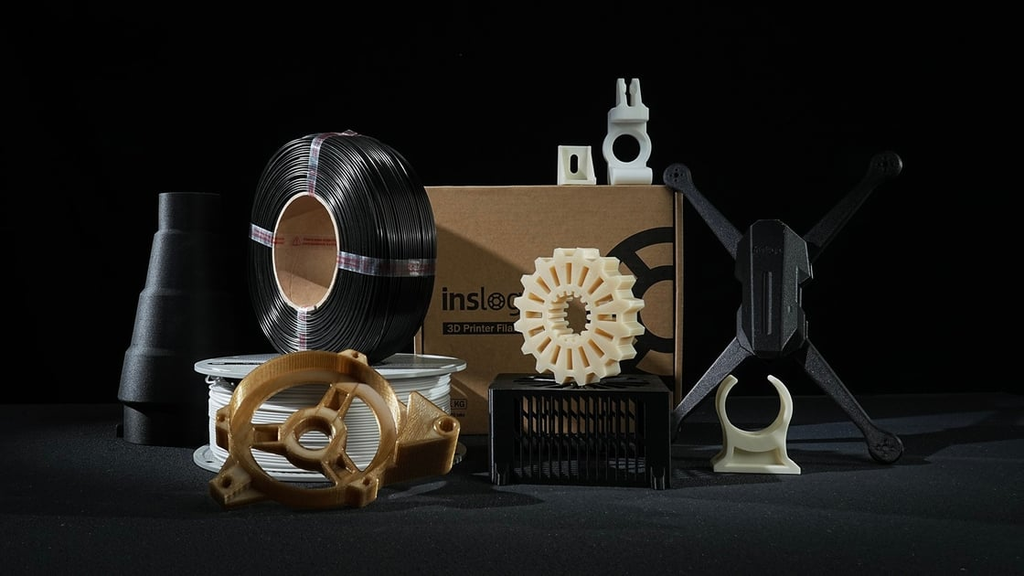
3D printing has opened new possibilities for product development, creative design, education, and engineering. As desktop printers become more accessible and printing technologies continue to advance, choosing the right materials has become an increasingly important part of achieving consistent results.
Among the brands serving this market is Inslogic, a company focused on 3D printing materials for a range of applications, from everyday creative projects to more demanding technical work.
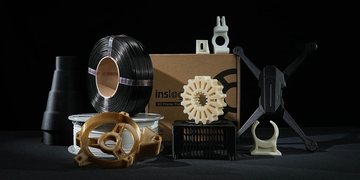
With a product portfolio that includes PLA, PETG, TPU, engineering-grade filaments, and specialized 3D printing resins, Inslogic aims to support different printing requirements without limiting users to a single material category. The brand also offers resources designed to help customers compare materials and identify suitable options for their projects.
But what does Inslogic offer, who might benefit from its products, and what should buyers consider before placing an order?
In this guide, we explore the brand, its main product categories, material options, and purchasing considerations to help you decide whether Inslogic deserves a place in your 3D printing setup.
Explore the official Inslogic store: Browse Inslogic 3D Printing Products
This article contains an affiliate link. Pixel Paths may earn a commission if you make a qualifying purchase through the link, at no additional cost to you.
What Is Inslogic?
Inslogic is a 3D printing materials brand operated by Inslogic International Holding Co., Ltd., with its published business address in Tsuen Wan, Hong Kong.
According to its official About Us page, the name Inslogic comes from the expression “Inspire Logic.” The company describes its mission as inspiring, enabling, and elevating the 3D printing experience through materials designed to support creativity and practical applications.
Its stated audience includes several groups:
- Hobbyists exploring desktop 3D printing.
- Makers developing custom objects and creative projects.
- Educators incorporating 3D printing into learning environments.
- Engineers working on prototypes and functional components.
- Users who require specialized materials for particular printing applications.
Rather than concentrating exclusively on entry-level filament, Inslogic maintains a broader catalog that includes general-purpose materials, aesthetic filaments, functional materials, engineering filaments, and different types of photopolymer resin.
This range gives prospective customers several categories to explore depending on their printers, technical requirements, budgets, and intended applications.
The brand's central message is straightforward: Keep Creating!
Its philosophy emphasizes using materials as a foundation for experimentation, problem-solving, and creative development.
Source: Official Inslogic About Us page.
Inslogic Product Portfolio: What Does the Brand Sell?

Inslogic's catalog covers two principal material categories: filament for filament-based 3D printing and resin for compatible resin-based printers.
The company also promotes filament storage solutions, including the FilaDC i10 dehumidifying cabinet.
Understanding the differences between these products is essential because each category serves a different printing process and set of requirements.
1. 3D Printer Filaments
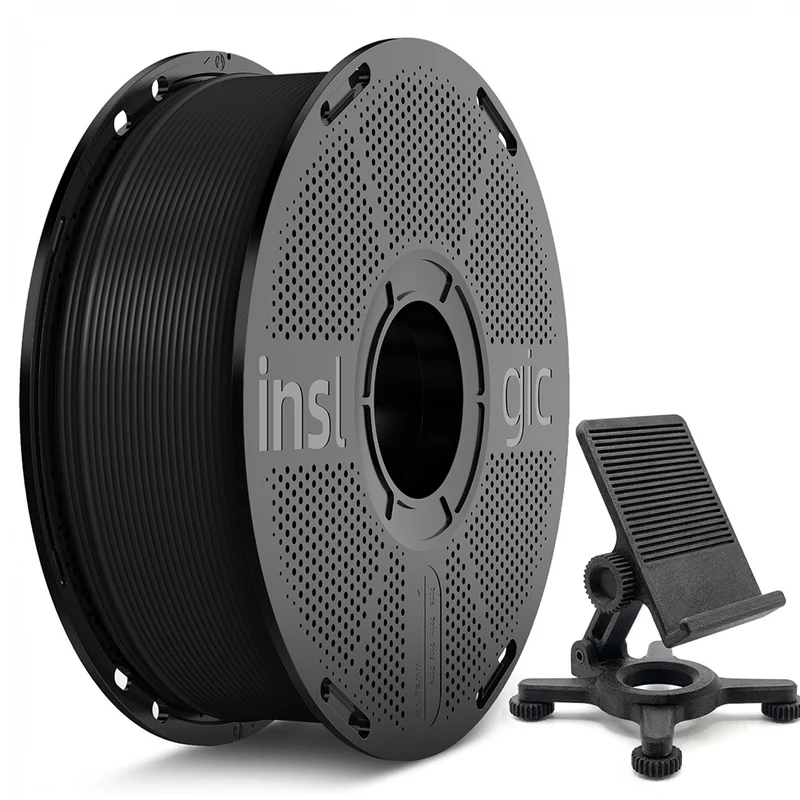
Filament is the material used by fused deposition modeling and fused filament fabrication printers. The printer heats the material and deposits it layer by layer to create an object.
Inslogic offers several filament types, each designed for different combinations of printability, appearance, flexibility, and mechanical performance.
| Filament Type | General Characteristics | Potential Applications |
|---|---|---|
| PLA and PLA Pro | Generally accessible and straightforward to print | Decorative objects, prototypes, models, and everyday prints |
| Matte PLA | Matte surface appearance | Decorative models and visual prototypes |
| PETG Pro | Combines printability with useful toughness and chemical resistance | Functional household parts, brackets, and general-purpose components |
| TPU 95A and TPU 90A | Flexible thermoplastic materials | Flexible parts, protective components, and custom accessories |
| ASA | Weather-resistant material commonly used for outdoor applications | Outdoor enclosures and functional components |
| Carbon-fiber-reinforced filaments | Reinforced formulations intended for selected structural applications | Lightweight functional parts and technical prototypes |
| Nylon-based engineering filaments | Designed for demanding mechanical applications, depending on formulation | Engineering prototypes and specialized components |
| PEEK | High-performance engineering thermoplastic | Specialized industrial and engineering applications requiring suitable equipment |
The table describes general material characteristics rather than guaranteeing the performance of every Inslogic formulation. Actual results depend on the specific product, printer, processing conditions, and application.
Inslogic's official catalog includes general-purpose filaments alongside functional and engineering materials. This allows users to compare options across different price points and performance requirements.
Why this matters: A decorative model, a flexible component, and a heat-resistant engineering part rarely require the same material. Choosing a filament based on the intended application can be more important than simply choosing the cheapest available spool.
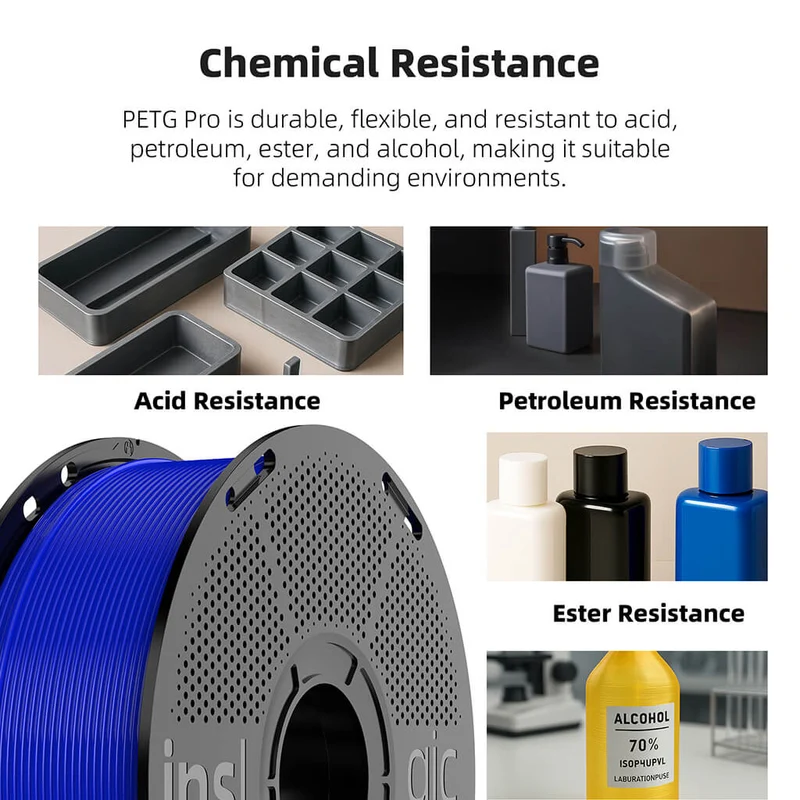
Explore the range: Inslogic 3D Printer Filaments.
2. 3D Printing Resins
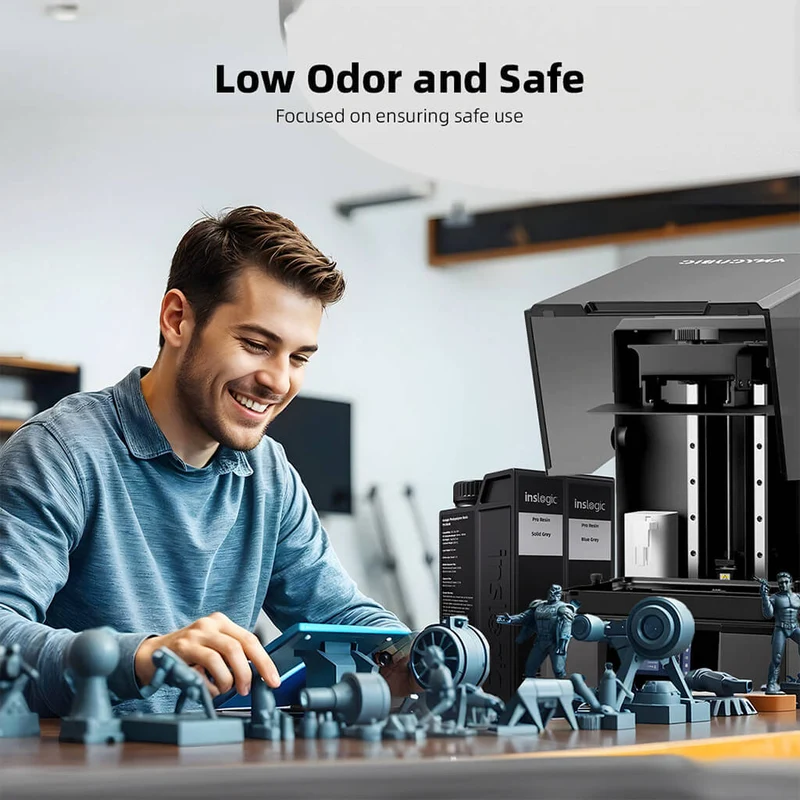
Resin printing uses liquid photopolymer materials that solidify when exposed to an appropriate light source. It is commonly used for applications that benefit from fine details and carefully controlled surface finishes.
Inslogic offers several resin categories, including general-purpose, high-detail, engineering-oriented, flexible, and specialized dental model materials.
Here is an overview of selected options.
| Resin Category | Intended Focus | What Buyers Should Consider |
|---|---|---|
| Standard Pro Resin | General-purpose resin printing | Ease of use, surface finish, and overall value |
| High Detail Resin | Fine details and intricate models | Feature definition, dimensional accuracy, and finishing requirements |
| Water-Washable ABS-Like Resin | A resin formulation designed for selected mechanical characteristics and water-washable processing | Manufacturer instructions, mechanical properties, and proper post-processing |
| High Clear Resin | Transparent or clear-looking printed objects | Optical clarity, curing, and finishing requirements |
| Nylon-Like Tough Resin | Toughness-oriented applications | Strength, flexibility, and the requirements of the finished part |
| Flexible 70A Resin | Flexible printed components | Required flexibility and compatibility with the application |
| High Temp Resin | Applications where elevated-temperature performance matters | Published heat-resistance specifications and curing requirements |
These products are not interchangeable. The most appropriate resin depends on the intended model, printer compatibility, mechanical requirements, and post-processing workflow.
For example, a miniature designed to showcase fine surface details has different priorities from a prototype that needs flexibility or elevated-temperature resistance.
Buyers should consult the technical data sheet for the specific resin rather than relying on the product name alone.
Important safety consideration: Photopolymer resin requires careful handling. Follow the manufacturer's safety data sheet, wear appropriate protective equipment, work in a suitably ventilated area, and follow the prescribed washing and curing procedures. Water-washable does not mean that uncured resin or contaminated wash water can be disposed of freely down a drain.
Explore the range: Inslogic 3D Printer Resins.
What Makes Inslogic Worth Exploring?
A product catalog alone does not establish whether a brand is the right choice. Buyers should also consider product variety, available technical information, purchasing options, and the suitability of individual materials for their projects.
Several aspects of Inslogic's offering are worth examining.
A Broad Selection of Material Types
One notable characteristic of the Inslogic catalog is its range of materials.
The selection extends beyond basic PLA and PETG to include flexible TPU, carbon-fiber-reinforced materials, nylon-based filaments, and high-performance engineering thermoplastics.
For customers who work on different types of projects, this breadth can make it easier to investigate multiple material options through one supplier.
However, a broad catalog does not automatically mean that every material will be suitable for every printer. Users should verify nozzle temperature, heated-bed requirements, enclosure recommendations, nozzle compatibility, and other relevant specifications before purchasing.
Options for Both Creative and Functional Projects
Not every 3D printing project has the same goal.
Some users prioritize visual appearance, while others need flexibility, toughness, dimensional stability, or resistance to particular environmental conditions.
Inslogic's catalog addresses these different requirements through separate material families.
For example:
- PLA and decorative PLA variants may suit visual projects and everyday models.
- PETG may be appropriate for selected functional components.
- TPU is worth considering when flexibility is required.
- Engineering filaments may be relevant for more demanding prototypes, provided the printer can process them correctly.
- Specialized resins may suit models that require particular detail, clarity, or mechanical characteristics.
The important distinction is that the material should be selected according to the job, not simply according to its marketing category.
Product Comparison Resources
Inslogic provides dedicated comparison pages for filaments and resins.
These resources can help shoppers navigate a catalog containing multiple material formulations.
For users who are still deciding between two products, comparing the published properties of each material is a sensible starting point.
Before making a final decision, buyers should also review the technical data sheet and determine whether the stated properties were measured under conditions relevant to their intended application.
Resources:
A Dedicated Filament Storage Solution
Inslogic has also introduced the FilaDC i10 Filament Dehumidifying Cabinet, developed in collaboration with SUNLU.

The product is designed to store multiple filament spools while managing humidity. The official product page describes a ten-spool capacity and an automated molecular-sieve dehumidification system.
This is relevant because moisture absorption can affect print quality for hygroscopic materials, including nylon and certain other engineering filaments.
A dedicated storage cabinet may appeal to users who keep several spools available for frequent printing or who work with materials that require more careful moisture management.
However, a dehumidifying cabinet should not automatically be treated as a replacement for a heated filament dryer when a material requires active drying before printing. Buyers should follow the processing requirements specified for their particular filament.
Explore the product: FilaDC i10 Filament Dehumidifying Cabinet.
Inslogic FilaDC i10: A Closer Look at Filament Storage
Moisture management is an important consideration in 3D printing.
When certain filaments absorb moisture, they can produce inconsistent extrusion, surface imperfections, stringing, or other printing problems. The severity depends on the material, exposure conditions, and printer settings.
The FilaDC i10 is designed to help users organize their filament collection while maintaining a controlled storage environment.
According to Inslogic's product information, its key features include:
- Storage capacity for up to ten filament spools.
- An automated molecular-sieve dehumidification system.
- Humidity management at room temperature.
- A cabinet design intended for continuous filament storage.
The official listing describes a target humidity range of approximately 10%–45% relative humidity.
Actual conditions may vary with the environment, usage, and product operation, so buyers should consult the latest specifications before purchasing.
Who Might Benefit From the FilaDC i10?

The cabinet may be worth considering for:
Frequent 3D printing users: People who switch between different filaments and want their materials organized in one location.
Engineering filament users: Those working with moisture-sensitive materials may benefit from dedicated storage, alongside any drying procedures required before printing.
Makers with limited workspace: A consolidated storage solution may help keep a multi-material setup organized.
Small workshops and studios: Users managing multiple spools may appreciate having a dedicated place to store their materials between projects.
The main consideration is cost versus actual need. Someone who prints occasionally with a small selection of PLA may not require a ten-spool cabinet, while a more active user handling multiple material types may find dedicated storage more useful.
Product information: Official FilaDC i10 listing.
Who Is Inslogic Best Suited For?
Inslogic's product range may appeal to several types of 3D printing users.
Beginners and Hobbyists
New users often benefit from materials that are relatively straightforward to print and do not require unusually demanding equipment.
PLA is commonly considered a practical starting point for many desktop printing projects.
Inslogic's PLA options may be worth comparing with other brands based on price, color availability, dimensional consistency, and compatibility with the user's printer.
Beginners should prioritize predictable printing behavior and clear material specifications over advanced performance claims.
Makers and Creative Professionals
People producing decorative models, custom accessories, display pieces, and personalized objects may be interested in the brand's range of colors and aesthetic filament options.
For resin users, high-detail formulations may also be worth exploring when the intended printer and model benefit from fine features.
The right choice depends on the visual outcome, post-processing requirements, and intended use of the finished object.
Engineers and Technical Users
Inslogic's engineering filament range includes materials designed for more specialized applications.
However, high-performance materials can introduce additional requirements, including higher printing temperatures, suitable hotends, controlled environments, and more demanding processing conditions.
Users should confirm that their equipment supports the chosen material and that the material's measured properties meet the requirements of the finished part.
For safety-critical, load-bearing, or regulated applications, independent validation and application-specific testing remain essential.
Educators and Learning Environments
Educational settings use 3D printing for design exercises, prototyping, demonstrations, and practical learning.
A range of material options can help educators introduce students to the differences between common thermoplastics and specialized materials.
The best material will depend on the learning objective, equipment, budget, classroom procedures, and applicable safety requirements.
What Should You Check Before Buying Inslogic Products?
Even when a brand offers a suitable product category, the specific product still needs to meet your requirements.
Before placing an order, consider the following factors.
1. Printer Compatibility
Check the printer manufacturer's recommended material specifications.
For filament, this may include:
- Filament diameter.
- Maximum hotend temperature.
- Heated-bed requirements.
- Nozzle material and wear resistance.
- Enclosure requirements.
- Recommended printing speed.
For resin, verify the printer's resin compatibility, required light wavelength, and relevant curing specifications.
A material's advertised capabilities are only useful if your equipment can process it correctly.
2. Technical Specifications
Look beyond the product name.
Depending on the application, useful data may include tensile strength, elongation at break, impact resistance, heat-deflection temperature, shrinkage, and dimensional stability.
For engineering materials, also examine moisture sensitivity, processing requirements, and whether published test results correspond to the intended operating conditions.
Not every product page will provide every specification, so contact the manufacturer when an important requirement remains unclear.
3. Total Cost
The listed price is only one part of the purchasing decision.
Consider shipping costs, discounts, quantity requirements, taxes, spool or refill options, and the amount of material included.
If you print regularly, multi-roll offers or refill formats may be worth comparing with individual spools.
Always check the final checkout price because promotional offers and product availability can change.
4. Reviews and Independent Testing
Customer reviews can help identify recurring experiences with printability, packaging, color consistency, and customer support.
However, customer feedback is not a substitute for controlled testing.
For a more demanding application, look for independent test results or conduct your own repeatable tests before committing to large quantities.
5. Shipping, Returns, and Support
Review the current shipping policy, return conditions, warranty terms, and customer support channels before ordering.
This is particularly important for international customers, who may face different shipping times, return costs, or regional restrictions.
You can find the relevant information on the Inslogic Support and Policies pages.
Inslogic Pros and Cons
Based on the publicly available product information, the following is a preliminary assessment rather than a hands-on product test.
| Potential Advantages | Considerations |
|---|---|
| Broad range of filament and resin categories | Product specifications should be checked individually |
| Options for creative, general-purpose, and engineering applications | Some engineering materials require specialized equipment |
| Dedicated comparison resources | Buyers may still need additional technical guidance |
| Multiple material choices for different printing needs | Not every material will suit every printer |
| Filament storage equipment is also available | A dedicated cabinet may be unnecessary for occasional users |
| Online store and published customer support information | Delivery, returns, and service experience should be assessed for the buyer's region |
An Important Distinction
This assessment is based on published brand information and product listings. It does not establish that Inslogic outperforms competing brands, nor does it verify the consistency of every product batch.
A fair comparison should consider the specific material, its price, technical specifications, printer compatibility, and results under comparable printing conditions.
Inslogic vs. Other 3D Printing Material Brands
The 3D printing materials market includes established manufacturers, specialist engineering-material suppliers, and brands focused on value-oriented desktop printing.
Rather than assuming one brand is universally better, shoppers should compare products according to their intended use.
| Comparison Factor | What to Evaluate |
|---|---|
| Material selection | Does the brand offer the filament or resin required for your project? |
| Printability | How reliably does the material print on your specific machine? |
| Mechanical performance | Do the measured properties meet your requirements? |
| Surface finish | Does the material produce the appearance you need? |
| Price per kilogram or liter | How does the cost compare with equivalent materials? |
| Technical documentation | Are processing instructions and material specifications available? |
| Customer support | Can the supplier answer product and compatibility questions? |
| Shipping and availability | Can you obtain the material reliably in your region? |
Inslogic may be worth adding to a shortlist when its product range and pricing match your requirements.
For a meaningful comparison, however, choose equivalent materials and compare current prices, technical data, and independently observed results. A general-purpose PLA should not be compared directly with an engineering-grade polymer simply because both are sold as 3D printing filament.
Is Inslogic Worth Considering?
Inslogic presents itself as a 3D printing materials brand built around the idea of combining technical materials with creative possibilities.
Its catalog covers several broad needs, from everyday PLA and PETG printing to flexible filaments, engineering materials, and specialized resin formulations.
The additional focus on filament storage also gives the brand a presence beyond consumable printing materials.
For hobbyists, makers, educators, and some engineering users, the breadth of the catalog provides a useful starting point for researching products.
Nevertheless, choosing a material should always involve checking the technical specifications, equipment requirements, and actual suitability for the intended application.
Our verdict: Inslogic is worth exploring if you are looking for a broader selection of 3D printing materials or want to compare filament and resin options within one product catalog. Whether it is the best choice for your setup depends on the specific material, its performance, the final price, and your printing requirements.
For demanding engineering applications, validate the material through relevant testing before using it in a finished product.
Explore Inslogic Products
Ready to browse the available materials?
Visit the official store to compare filament types, explore resin formulations, and review current product specifications.
Shop Inslogic 3D Printing Materials
You can also explore the brand's dedicated product pages:
- Shop 3D Printer Filaments
- Shop 3D Printer Resins
- Explore Filament Comparison
- Explore Resin Comparison
Frequently Asked Questions
What is Inslogic?
Inslogic is a brand specializing in 3D printing materials. Its catalog includes filament, resin, and related products intended for different creative, general-purpose, and technical applications.
What products does Inslogic sell?
The brand offers PLA, PETG, TPU, selected engineering filaments, multiple resin formulations, and filament storage equipment such as the FilaDC i10.
Is Inslogic filament compatible with all 3D printers?
Not necessarily. Compatibility depends on the material, filament diameter, printer specifications, and processing requirements. Check the individual product information and your printer manufacturer's recommendations before purchasing.
What is the difference between Inslogic filament and resin?
Filament is used in filament-based printing systems that deposit melted thermoplastic layer by layer. Resin is a liquid photopolymer used in compatible resin printers and solidified through light exposure. Each process requires different equipment and handling procedures.
Is Inslogic suitable for beginners?
Some of its general-purpose materials, such as PLA, may be suitable for beginners. More specialized filaments and resins can require additional equipment, experience, and careful processing.
What is the FilaDC i10?
The FilaDC i10 is a filament dehumidifying cabinet developed by Inslogic in collaboration with SUNLU. The product is designed to store multiple spools while managing humidity. Consult the official product page for current specifications and availability.
Where can I buy Inslogic products?
Products are available through the official Inslogic online store. Check the current shipping policy to confirm delivery availability and terms for your location.
Final Thoughts
The materials used in 3D printing influence the appearance, mechanical properties, and reliability of finished parts. Selecting the right material is therefore an important step for anyone looking to improve a printing workflow.
Inslogic offers a range of filament and resin products that can be explored across different printing needs, from creative projects to more specialized applications.
Its catalog and comparison resources give prospective buyers a starting point for evaluating the available options. As with any materials supplier, the final decision should be based on product-specific evidence, compatibility, and value rather than brand messaging alone.
For users considering a new material or looking to expand their current selection, Inslogic is a brand worth researching further.
Ready to find the right material for your next project?
Explore Inslogic's Official Store
The Review
Inslogic 3D Printing Materials
Inslogic offers a diverse range of 3D printing filaments, resins, and specialized materials for hobbyists, makers, educators, and engineering users. Its product portfolio provides options for different printing needs, although buyers should verify material specifications, printer compatibility, and performance requirements before purchasing.