





















The tech industry is witnessing a dramatic shift as Apple reportedly attempts to secure approval from the Trump administration to purchase memory chips from a blacklisted Chinese semiconductor company. This bold move comes at a time when the tech giant is battling a severe and costly global memory crunch.
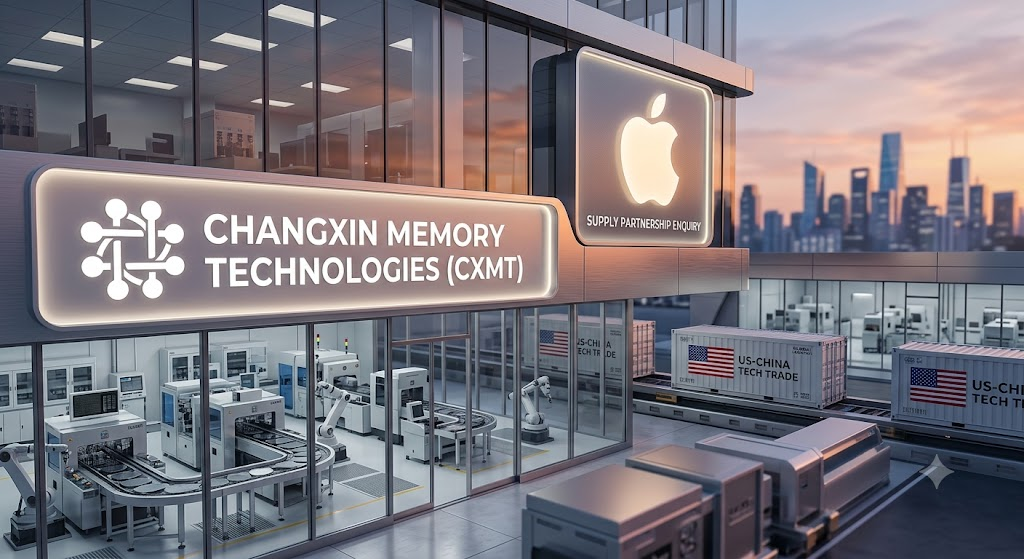
According to a report by The Financial Times, Apple is actively seeking clearance to partner with ChangXin Memory Technologies (CXMT), a prominent Chinese memory chipmaker recently added to a critical US government blacklist.
Why Apple is Eyeing Blacklisted CXMT
CXMT was recently placed on the Pentagon's 1260H list, a directory of companies the US Defense Department believes are linked to the Chinese People's Liberation Army (PLA).
While Apple is technically not prohibited from doing business with CXMT, proceeding without the White House's blessing carries heavy risks. The Defense Department is strictly banned from signing contracts with any company on this list, or even utilizing their services through third-party vendors.
To mitigate political and regulatory backlash, Apple reportedly approached the US Commerce Department a month ago and is currently leveraging its political connections in Washington to smooth over the deal.
The Severe Memory Crunch Behind Rising Apple Prices
Apple’s desperation to diversify its supply chain highlights the intense pressure of the current global memory chip shortage. Currently, the company relies heavily on US-based Micron and South Korean tech giants Samsung and SK Hynix for its memory components.
Recently, Apple CEO Tim Cook warned investors and consumers alike that the company could no longer escape the crippling effects of the memory shortage. This supply bottleneck has already triggered significant price hikes across Apple's premium hardware lineup:
- 1TB M5 MacBook Pro: Received a steep $300 price increase.
- MacBook Neo (Entry-level): Costs $100 more than before.
- iPad Pro Lineup: Prices surged by $200 across all models within a single week.
By integrating CXMT into its vendor list, Apple hopes to alleviate supply strains, lower manufacturing costs, and ultimately stabilize retail prices for its consumers.
Heavy Pushback Expected from US Congress
Despite Apple's backroom negotiations, the proposed partnership is expected to face fierce resistance from US lawmakers. Congress is anticipated to mount a heavy bipartisan protest if the Trump administration shows signs of agreeing to Apple's request.
“Apple choosing to partner with a Chinese military company would be a grave mistake.”
— John Moolenaar, Leader of Congressional efforts investigating China's geopolitical influence.
Final Thoughts
Apple's gamble on CXMT is more than just a supply chain rescue mission; it is a high-stakes geopolitical chess match between Washington and Beijing. Whether the White House will grant Apple an exception to protect American consumer tech pricing—or hold the line on national security—remains to be seen.















Great content! Keep up the good work!