














Smartwatch manufacturers frequently overlook battery endurance in pursuit of sleek aesthetics and superficial trends. Oppo, however, rejects this compromise. By equipping the Oppo Watch X3 with a massive battery cell—nearly double the capacity of Samsung’s Galaxy Watch 8—the company delivers a robust Wear OS 6 device designed for longevity.
While the fitness tracking algorithms exhibit noticeable inconsistencies, the X3 excels as a versatile, durable, and highly responsive daily driver. In this comprehensive Oppo Watch X3 review, we dive deep into its hardware, real-world performance, and standout features to see how it stacks up against the competition.
Oppo Watch X3 Specifications & Quick Rating
- Rating: 8.2 / 10
Pros
- Class-leading battery life (up to 5 days in standard smart mode)
- Rugged, premium titanium case styling
- Highly functional and responsive Google Gemini AI integration
- Smooth, lag-free dual-chip performance
Cons
- Restricted global availability (requires importing in the US)
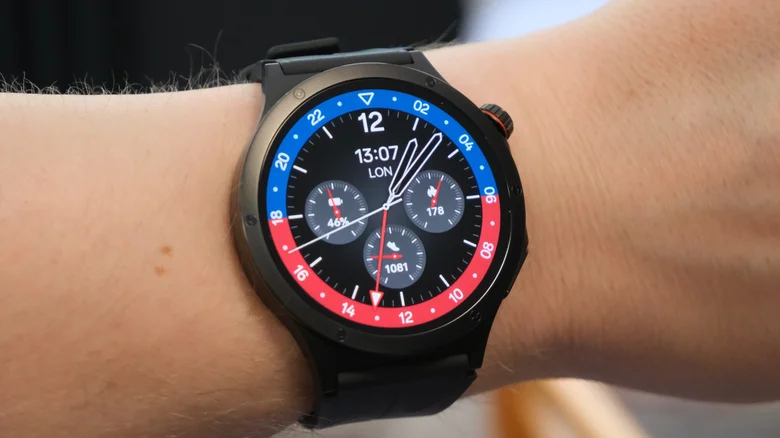
- Cluttered and rigid default watch face complications
- Inconsistent automatic workout detection and health tracking metrics
Hardware and Design: The Shared Lineage with OnePlus
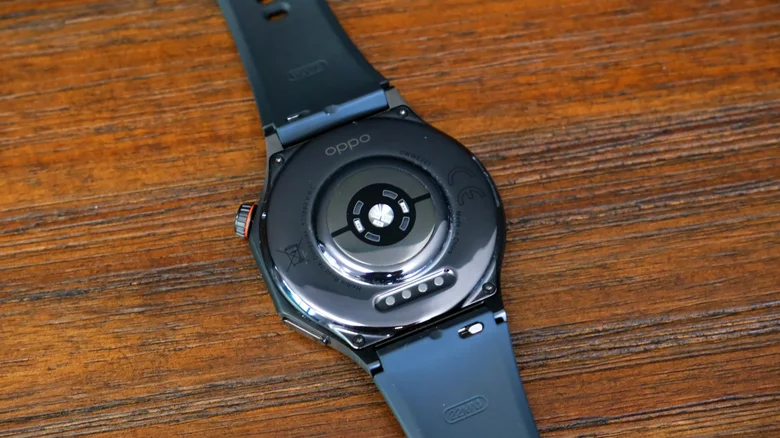
Addressing the elephant in the room is unavoidable: the Oppo Watch X3 bears an undeniable resemblance to the previous year's OnePlus Watch 3. Because both brands operate under the same parent company—and amid industry rumors that OnePlus is shifting away from Western markets—the X3 effectively functions as a refined, strategically rebadged counterpart.
Core Hardware Specifications
Under the hood, the internal hardware configurations are completely identical:
- Display: 1.5-inch LTPO AMOLED screen with a crisp 466 x 466 resolution
- Memory & Storage: 2GB of RAM paired with 32GB of onboard storage
- Processor Architecture: A high-performance Snapdragon W5 base co-processing with a custom, low-power BES2800BP chip
Visual Aesthetics: Garmin Vibes vs. Diver Chronographs
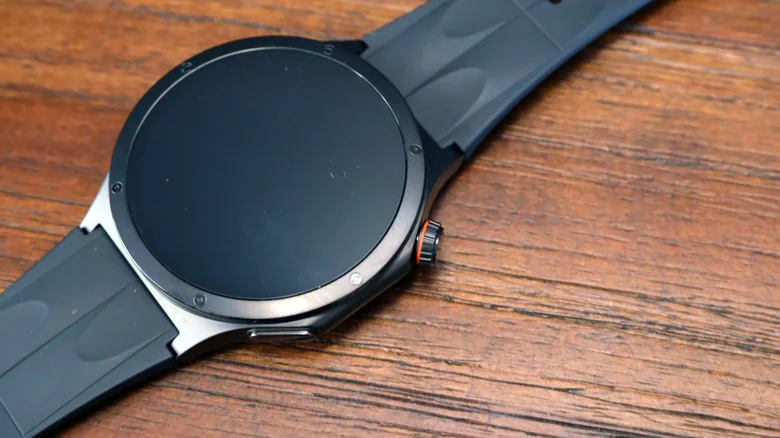
While the internal specifications match, the external styling introduces a distinct visual identity. The OnePlus version features a traditional diver's chronograph bezel, whereas Oppo opts for rugged faux rivets surrounding the 47mm titanium case.
This design choice shifts the X3’s aesthetic closer to a dedicated sports watch, giving the wearer the distinct look of a “Garmin person.” The construction successfully bridges the gap between a hardcore fitness wearable and a classic premium time-piece, minimizing the somewhat geeky impressions typical of large, tech-heavy smartwatches.
Real-World Performance, Battery Life, and Software
Durability and Rugged Build Quality
Oppo heavily marketed the Watch X3 on its slim profile, premium materials, and extreme durability. Real-world testing confirmed these claims. Following two weeks of intentionally rough handling, the titanium chassis and crystal display remained entirely free of chips, scratches, or structural dents, proving its capability to withstand harsh environments where other wearables might get damaged.
Paradigm-Shifting Battery Endurance
The true centerpiece of the Oppo Watch X3 is its 646mAh battery, engineered with a 10 percent silicon content substrate. This drastically outperforms standard offerings from Apple, Google, and Samsung.
- Always-On Display (AOD) Active: Running the AOD from 8:00 AM to 9:00 PM yields roughly three full days of heavy operational use.
- Gesture Wake Active: Turning off the AOD and relying purely on the wrist-raise trigger extends the battery life closer to five consecutive days.
- Power-Saving Mode: For extreme scenarios, the battery can stretch up to 16 days of basic tracking.
Interface Fluidity and Wear OS 6 Quirks
Thanks to the dual-chip setup, the overall user interface feels snappy and entirely devoid of lag when switching between applications. Voice-to-text messaging works flawlessly, though the built-in speaker sounds thin and introduces noticeable audio clipping and fuzz at maximum volumes.
However, the software experience reveals some typical Wear OS pain points:
- Menu Clutter: The app layout suffers from excessive shortcut padding. Rather than grouping related utilities into unified panels, the OS splits functions into separate icons (e.g., individual shortcuts for the stopwatch, alarm, and timer), which complicates menu navigation.
- Rigid Watch Faces: The default watch faces lack deep customization options. For example, the “Twin Time” chronograph interface features three detailed subdials, yet users cannot remap or reassign the specific data streams those subdials display, resulting in layouts that feel either overcrowded or under-utilized.
- Connectivity & Minor Glitches: Bluetooth pairing can be erratic with older generations of wireless headphones, though modern pairs connect seamlessly. Additionally, the touch interface occasionally triggers accidental watch face changes, and failure to manually toggle “Sleep Mode” can result in disruptive early-morning wake-up alerts.
Advanced AI Features and Unique Controls
Standalone Google Gemini AI Integration
Long-pressing the physical crown activates Google Gemini. The integration is remarkably practical due to the watch’s built-in Wi-Fi connectivity. This allows users to access Gemini commands—such as setting kitchen timers or executing quick queries—independently, even if the paired smartphone is turned off or charging in another room.
Short Video Interface Control
The Oppo Watch X3 introduces a niche software utility dedicated specifically to hands-free media scrolling for TikTok and YouTube Shorts. When activated, a four-way control overlay populates the watch face. This feature allows users to navigate short-form video feeds from a distance when holding the phone with one hand is impractical.
Health and Fitness Tracking Diagnostics
The fitness and health tracking suite presents a stark contrast between high-accuracy hardware and unpolished automation algorithms.
Workout Auto-Detection Accuracy:
[Walking]   ===============> Highly Sensitive (Too Aggressive)
[Labor]     ======> Completely Unresponsive (0% Detection)
Erratic Workout Detection
- The Good: While walking, the automatic detection triggers rapidly, accurately backfilling the initial steps of the journey into the log.
- The Bad: The algorithm is overly sensitive to brief pauses, aggressively vibrating to signal a pause at pedestrian crossings and instantly vibrating again upon resuming movement.
- The Flaw: During an intensive, eight-hour manual labor session involving shifting soil and rocks, the watch failed to log any specific activity. Despite registering an elevated heart rate and double the user's baseline caloric burn, the software failed to prompt the user or categorize the physical exertion.
Biometric Data Discrepancies
When cross-referenced with dedicated health monitors like the Oura Ring 5 and Ultrahuman smart rings, the biometric sensors on the Oppo Watch X3 demonstrated significant baseline variances. The X3 consistently overreported total sleep duration, logged a noticeably higher resting heart rate (RHR), and registered elevated maximum and minimum heart rate metrics. Consequently, users are advised to interpret the fitness data as general directional trends rather than precise absolute values.
Final Verdict: Exceptional Value with Major Distribution Barriers
The Oppo Watch X3 is an incredibly strong competitor in the Wear OS landscape, offering a compelling blend of structural durability, smooth processing power, and revolutionary battery life. It stands toe-to-toe with flagship offerings from Google and Samsung.
However, its primary limitation is market availability. In regions like the United States, Oppo does not maintain official retail channels, forcing prospective buyers to source the device through international importers. For many consumers, the lack of localized warranty support and regional availability will be a decisive dealbreaker. Yet, for those willing to import, the Oppo Watch X3 rewards users with unmatched battery performance and true multi-day reliability.